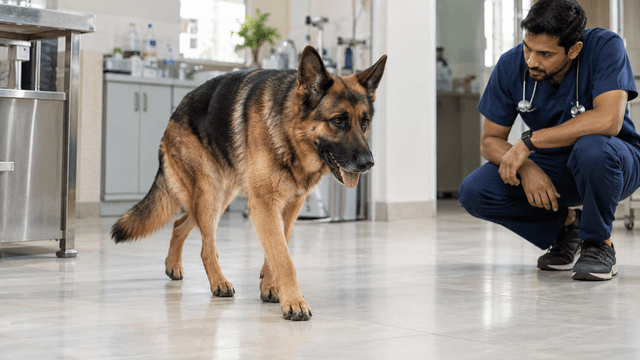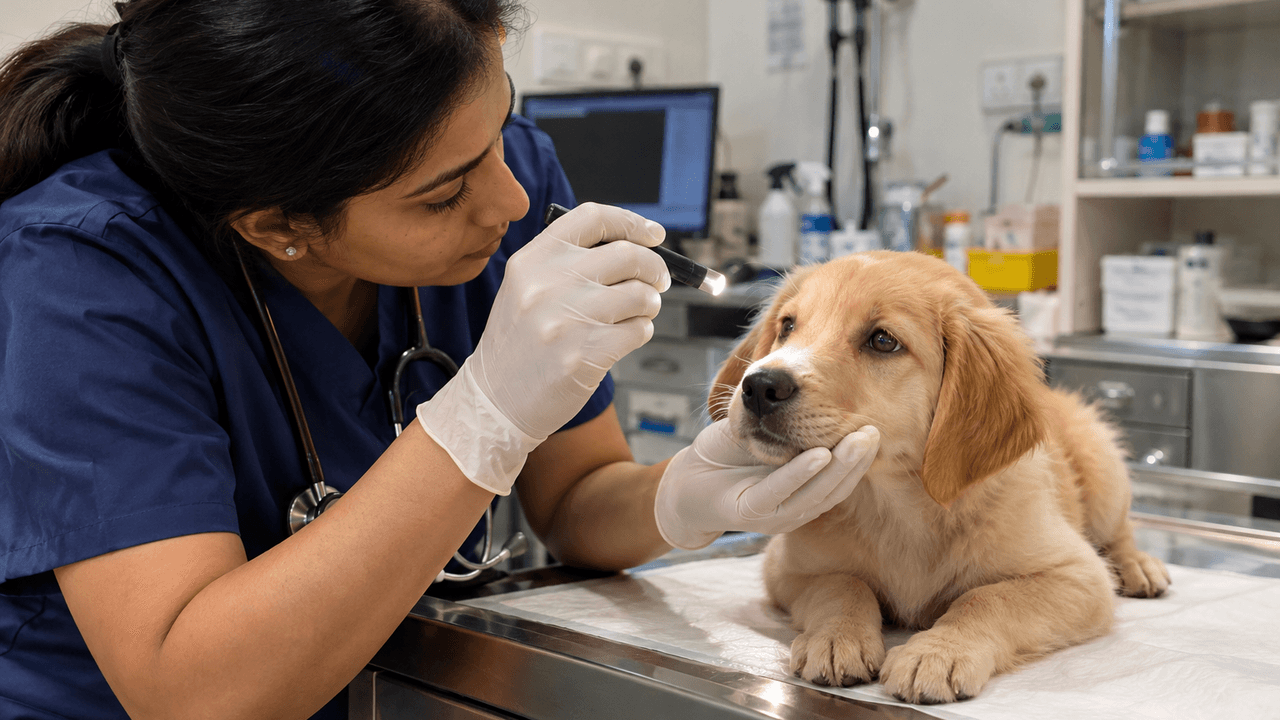
Canine distemper is a viral disease with no direct cure, a real risk of death or permanent neurological damage in unvaccinated puppies, and it spreads easily wherever unvaccinated dogs mix, including street dogs, shelters, and parks. If your puppy has thick nasal or eye discharge, fever, and lethargy together, especially if unvaccinated or only partially vaccinated, go to a vet today, not "when it gets worse." There is no home treatment for distemper.
Why this matters in India
India has one of the largest free-roaming dog populations in the world, and distemper circulates readily in that population, meaning any puppy who has contact, even brief or indirect, with street dogs, a shelter environment, or an unvaccinated litter carries real exposure risk. This is a materially different risk profile from many Western markets where distemper is now uncommon due to near-universal vaccination and a much smaller stray population. Indian pet parents adopting indie puppies from the street or a shelter, a wonderful and increasingly mainstream choice, need to understand that these puppies are statistically more likely to have been exposed to distemper before adoption than a puppy bought from an established pedigree breeder, which makes prompt, complete vaccination even more time-critical, not less.
What actually happens inside your puppy's body
Canine distemper is caused by canine distemper virus (CDV), a morbillivirus related to the human measles virus. It spreads primarily through respiratory droplets from an infected dog's coughing, sneezing, or nasal discharge, and can also spread through shared bowls, bedding, or direct contact.
Once inhaled, the virus first replicates in the lymphoid tissue of the respiratory tract and rapidly spreads through the bloodstream to lymph nodes, where it suppresses the immune system, one reason secondary bacterial infections are so common and dangerous in distemper cases. From there the virus spreads to essentially every epithelial tissue in the body: the respiratory tract (causing pneumonia), the gastrointestinal tract (causing vomiting and diarrhoea), the skin (causing the hardened footpads sometimes called "hard pad disease"), and critically, the central nervous system. Once the virus crosses into the brain and spinal cord, it causes progressive neurological damage that, even in dogs who survive the initial systemic illness, can leave permanent deficits such as seizures or repetitive muscle twitching (myoclonus) that persists for life.
Clinical signs, in the order they usually appear
- Early phase (respiratory and systemic), typically days 3 to 6 after exposure: fever (sometimes biphasic, meaning it dips and returns), lethargy, reduced appetite, and watery-to-thick discharge from the eyes and nose. This stage is easily mistaken for a common cold or mild kennel cough, which is part of why distemper is sometimes caught late.
- Progressing phase: coughing, laboured breathing if pneumonia develops, and gastrointestinal signs including vomiting and diarrhoea. Some puppies develop thickened, hardened footpads and nose leather, the classic "hard pad" sign, though not every case shows this.
- Neurological phase, which can appear weeks after the initial illness or even in puppies who seemed to partially recover: muscle twitching (myoclonus, often rhythmic and localised to one muscle group at first), seizures, uncoordinated gait, circling, or partial paralysis. Neurological signs carry a guarded to poor prognosis and, when they occur, are often permanent even if the puppy survives.
A puppy can appear to be improving from the respiratory and gastrointestinal illness and then develop neurological signs later, which is why veterinary follow-up and continued observation matters even after initial symptoms seem to be settling.
The time window that matters
There is no antiviral cure for canine distemper; treatment is entirely supportive, meaning intravenous fluids for dehydration, antibiotics to control secondary bacterial infections (the virus itself is not touched by antibiotics, but the immune suppression it causes makes bacterial pneumonia and gut infections common and dangerous), anti-nausea and anti-diarrhoeal medication, and seizure control if neurological signs develop. Because there is no direct antiviral treatment, the single most important intervention window is before infection: completing the core puppy vaccination series on schedule. Once clinical signs appear, survival and long-term outcome depend heavily on how early supportive care starts and whether the case remains in the systemic phase or has already progressed to neurological involvement, which is a major reason to seek veterinary care at the very first signs (discharge plus fever plus lethargy) rather than waiting to see if it resolves on its own.
Vaccination: the actual defence
The core vaccine that protects against distemper in India is typically given as a combination vaccine, commonly labelled DHPPi+L or similar (Distemper, Hepatitis, Parvovirus, Parainfluenza, Leptospira), starting at 6 to 8 weeks of age, with boosters roughly every 3 to 4 weeks until 16 weeks of age, followed by a booster at one year and then per your vet's recommended schedule thereafter (commonly annual or per titre testing, a topic worth its own separate discussion with your vet). Until a puppy has completed this initial series, they remain vulnerable, and vets generally advise limiting exposure to unknown or unvaccinated dogs, dog parks, and areas with heavy stray dog traffic during this window, a genuinely difficult but important restriction for Indian pet parents living in dense urban neighbourhoods where street dogs are a constant presence.
Distinguishing distemper from other common puppy illnesses
Because the early signs of distemper (discharge, fever, lethargy) overlap with far more common and less serious puppy ailments, such as a mild upper respiratory infection or ordinary kennel cough, vets typically rely on a combination of vaccination history, the pattern and progression of signs over days, and, where needed, specific diagnostic testing rather than symptoms alone. A puppy with an unclear or incomplete vaccination history who develops thick discharge, fever, and lethargy together warrants a more urgent, thorough workup than a fully vaccinated puppy with a mild, brief cough and normal energy otherwise. This is precisely why sharing your puppy's full vaccination history, or being upfront that it is unknown (common with adopted street puppies), with your vet at the first sign of illness meaningfully changes how quickly and aggressively they will investigate for distemper specifically, rather than defaulting to a "wait and see if the cold clears up" approach that is reasonable for a fully protected puppy but genuinely risky for one whose immunity status is uncertain.
What it costs in India (2026)
Item | Metro (Mumbai, Delhi, Bengaluru, Hyderabad) | Tier-2 (Nagpur, Coimbatore, Lucknow, Indore) |
|---|---|---|
Core DHPPi+L vaccine, per dose | ₹500–₹1,200 | ₹300–₹700 |
Full puppy vaccination series (3–4 doses) | ₹2,000–₹4,500 | ₹1,200–₹2,800 |
Diagnostic test for distemper (antigen/PCR) | ₹1,500–₹3,500 | ₹1,000–₹2,500 (may need to send to a reference lab) |
Supportive hospitalisation (systemic phase, several days) | ₹8,000–₹25,000 | ₹4,000–₹15,000 |
Ongoing management if neurological signs develop | ₹5,000–₹20,000+, often indefinite for seizure control medication | ₹3,000–₹12,000+, often indefinite |
What affects the range: whether the case is caught in the early systemic phase (shorter, cheaper hospitalisation) or has progressed to pneumonia or neurological involvement (longer stay, specialist referral, and potentially lifelong seizure medication), and whether diagnostic testing is available in-house or needs to be sent to an external laboratory.
When to see a vet
- Go now: fever, thick eye or nasal discharge, and lethargy together in an unvaccinated or partially vaccinated puppy.
- Go now, treat as an emergency: any seizure, muscle twitching, circling, or uncoordinated gait at any point, including in a puppy who seemed to be recovering from an earlier illness.
- Book within 24 hours: persistent coughing, vomiting, or diarrhoea in a young puppy, even without fever, particularly if vaccination status is incomplete or unknown.
- Monitor at home only if: your puppy is fully vaccinated for age, shows no fever, discharge, or neurological signs, and is eating and behaving normally; even then, keep an eye out for any new symptoms over the following days.
Frequently asked questions
Distemper aur parvo mein kya farak hai?
Dono hi viral bimariyan hain jo unvaccinated puppies ko affect karti hain, lekin distemper mainly respiratory, GI aur nervous system ko target karta hai (aankhon-naak se discharge, aur baad mein seizures ya twitching), jabki parvo mainly severe vomiting aur bloody diarrhoea cause karta hai. Dono hi emergency hain aur turant vet se milna zaroori hai.
Can a vaccinated puppy still get distemper?
It is uncommon but not impossible, usually if the puppy was exposed before completing the full core vaccination series, or in the rare case of vaccine failure. Completing all doses on the recommended schedule gives the best protection, and any symptoms should still be evaluated regardless of vaccination history.
Is distemper contagious to humans or cats?
Canine distemper virus does not infect humans. It is related to but distinct from the feline panleukopenia virus and does not typically cause illness in cats, though cats have their own separate core vaccination needs.
My adopted street puppy has never been vaccinated. Is it too late?
It is not too late to start, but do this urgently, and mention the puppy's unknown history to your vet, since they may recommend starting the vaccination series sooner and combining it with closer monitoring during the vulnerable window before immunity is established.
Can adult dogs get distemper, or is it just a puppy disease?
Adult unvaccinated dogs remain susceptible throughout life. It is seen more often in puppies partly because maternal antibody protection fades unpredictably between roughly 6 and 16 weeks of age, a window vaccination protocols are specifically designed to cover, but any unvaccinated dog at any age can contract it.
What are the long-term effects if my puppy survives distemper?
Some puppies recover with no lasting effects, particularly if neurological signs never developed. Others are left with permanent effects such as repetitive muscle twitching (myoclonus), seizure disorders requiring lifelong medication, or hardened footpads. The outcome is genuinely variable and hard to predict early in the illness.
Sources
- WSAVA vaccination guidelines
- MSD Veterinary Manual, infectious disease section on canine distemper
A note from Critzo (please read): This article is general educational information written and reviewed by qualified veterinary professionals for Indian pet parents. It is not a substitute for an in-person consultation with your own veterinarian, who knows your pet, their history, and their current clinical state. Pets are individuals — breed, age, weight, pre-existing conditions, medications, and local disease patterns all change what is safe and what is not. Do not start, stop, or change any medication, vaccination schedule, diet, or treatment based on what you read here without first speaking to a registered veterinary practitioner. If your pet is showing emergency signs — collapse, seizure, severe bleeding, suspected poisoning, breathing difficulty, bloated abdomen, repeated vomiting or no urination for more than 12 hours — stop reading and go to the nearest 24-hour veterinary hospital immediately. You follow any guidance from this article at your own risk and at your pet's risk. Critzo, its authors, and its reviewers accept no liability for outcomes arising from decisions made without veterinary supervision.