A Golden Retriever puppy in India costs roughly ₹18,000–₹50,000 in 2026: metros typically ₹28,000–₹50,000 and tier-2 cities ₹18,000–₹35,000 for pet-quality. KCI-papered champion bloodlines cross ₹60,000–₹1,20,000. Plan ₹5,000–₹9,500 monthly upkeep with food and grooming as the largest recurring costs.
Why this matters in India
The Golden Retriever is one of the most-searched dogs in India and one of the most genuinely demanding to keep well. The breed's long double coat in Indian humidity, the high cancer rate documented internationally, and the realistic monthly cost are the three things most online guides skip. This article gives you the honest cost band and the long-coat-in-monsoon reality so you can make the buy decision with eyes open.
Golden Retriever price in India by city
City | Pet-quality (₹) | Show-quality (₹) | Notes |
|---|---|---|---|
Mumbai | 30,000–48,000 | 55,000–1,20,000 | Premium catteries here |
Delhi NCR | 28,000–45,000 | 50,000–1,10,000 | Largest market |
Bengaluru | 28,000–45,000 | 50,000–1,00,000 | Mid-band |
Hyderabad | 25,000–40,000 | 45,000–95,000 | Steady |
Pune | 24,000–40,000 | 45,000–90,000 | Metro-adjacent |
Chennai | 22,000–38,000 | 42,000–88,000 | Steady |
Kolkata | 20,000–35,000 | 38,000–80,000 | Lower mean |
Tier-2 | 18,000–32,000 | 35,000–70,000 | Verify parentage |
A "Golden" advertised at ₹8,000–₹12,000 is almost always either a Lab-Golden cross or a misrepresented Indian Spitz mix. Verify parents.
What affects the Golden Retriever puppy price?
- KCI registration and parents' pedigree: biggest lever
- Hip and elbow scores of parents: OFA / BVA / KCI hip clearance; ED clearance
- Bloodline reputation: show line, working line, or balanced
- Coat colour and pattern (light cream, golden, dark golden / red) preferences vary by market
- Sex: males slightly higher in many catteries
- Age: younger within the 8-week minimum
- Vaccination status
Are Golden Retrievers good for the Indian climate?
Goldens are slightly harder to keep in Indian climate than Labradors:
- Double coat with long feathering that traps heat and moisture
- Heat sensitivity: strict AC during peak summer, cool-hour walks only
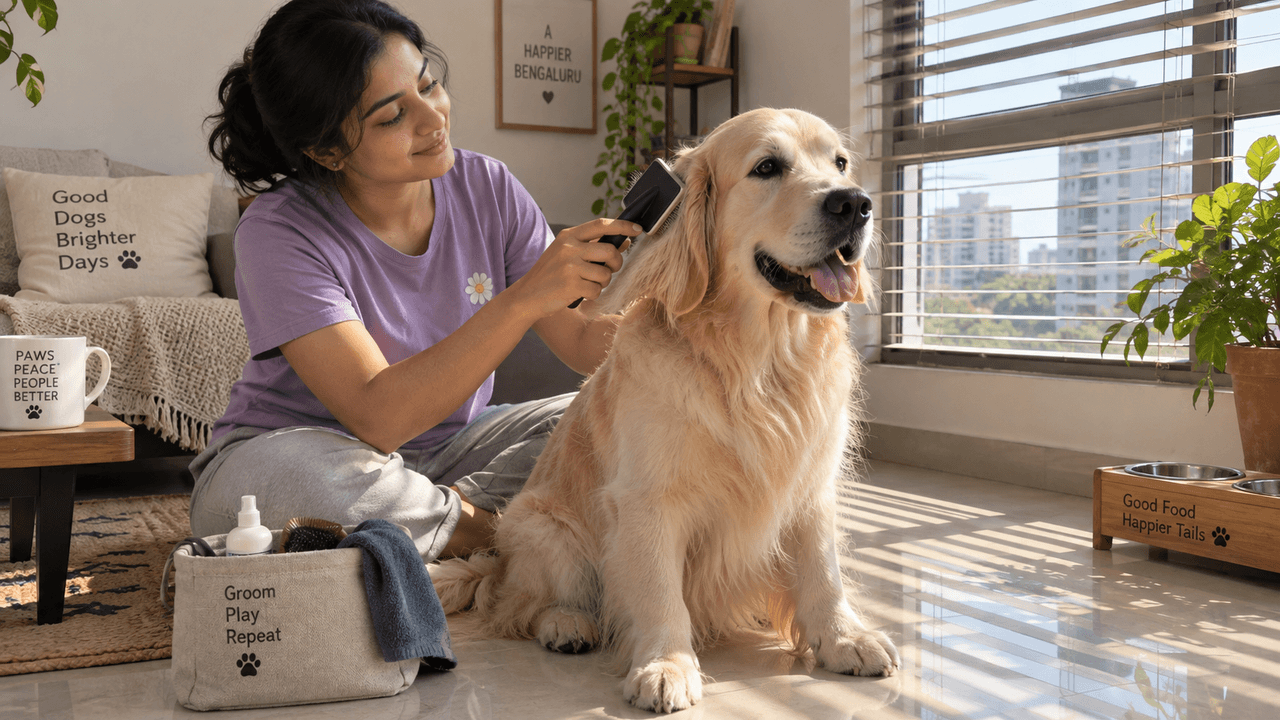
- Monsoon grooming: without daily brushing and weekly cleaning of feathering, fungal skin issues develop fast
- Ear infections: droopy heavy ears with feathering; weekly checks essential
Tier-2 dry-heat cities suit Goldens slightly better than humid coastal metros. With management, the breed thrives anywhere in India; without management, it suffers visibly.
Golden Retriever temperament
A well-bred Golden is:
- Famously gentle and child-friendly: top-tier family dog
- Highly trainable: eager and food-motivated
- Soft-mouthed: they explore and carry with gentle bite
- High exercise need until 7–8 years
- Slow maturing: Goldens are puppies emotionally until 2–3 years
- People-bonded to a fault: separation distress is common
This is one of the easiest temperaments to live with for a family that is home enough.
How much does a Golden Retriever cost monthly in India?
Cost head | Metro (₹) | Tier-2 city (₹) |
|---|---|---|
Monthly food (large-breed kibble + fresh additions) | 4,200–7,800 | 3,200–5,800 |
Year-1 vaccinations / annual booster | 4,500–8,000 / 1,500–3,000 | 3,000–6,000 / 1,000–2,500 |
Annual deworming + tick-flea preventives | 3,500–6,500 | 2,500–4,800 |
Hip / elbow X-ray screen (12–18 months) | 4,000–9,000 | 2,800–6,500 |
Grooming (professional, every 6–8 weeks) | 1,500–3,500/visit | 1,000–2,500/visit |
Group training classes (recommended) | 18,000–45,000 (course) | 12,000–28,000 (course) |
Optional pet insurance | 1,000–8,000/yr | 1,000–8,000/yr |
The grooming line is the differentiator from Labradors. For mobile groomers see [mobile dog grooming in India](/articles/mobile-dog-grooming-india).
Common Golden Retriever health issues in India
- Hip and elbow dysplasia: buy from screened parents; manage weight
- Cancer: Goldens have one of the highest cancer rates globally; particularly haemangiosarcoma, lymphoma, mast cell tumour. Annual senior screening matters.
- Skin and ear infections: long feathering + Indian humidity; weekly checks
- Hypothyroidism: relatively common; ask vet to screen during senior years
- Eye conditions: cataracts, progressive retinal atrophy; parent screening helps
- Cruciate ligament rupture: common large-active breed issue
The cancer rate is the most sobering single fact about the breed and the strongest case for early pet insurance enrolment. See [HDFC ERGO Paws n Claws](/articles/hdfc-ergo-paws-n-claws-review) and [Bajaj Allianz pet insurance review](/articles/bajaj-allianz-pet-insurance-review).
Golden Retriever vs Labrador
Trait | Golden Retriever | Labrador |
|---|---|---|
Coat | Long double, heavy feathering | Short dense double |
Climate tolerance India | Moderate (worse than Lab) | Moderate |
Grooming burden | High (weekly professional during monsoon) | Lower |
Trainability | Very high, soft style | Very high, eager style |
Temperament with kids | Famously gentle | Famously gentle |
Average lifespan India | 9–11 years | 9–11 years |
Cancer predisposition | Higher | Moderate |
Cost first year | Slightly higher (grooming) | Slightly lower |
For first-time owners in humid coastal cities, the Labrador is generally easier. For families in cool tier-2 or hill stations, the Golden's coat is less of an issue.
How to buy a Golden puppy safely
- See the puppy with its mother
- Ask for hip and elbow scores of both parents
- Get a signed vaccination card
- Confirm parents' cancer history where possible
- Confirm a 7-day vet-check return policy
First-week vet visit within 48 hours is non-negotiable.
When to call the vet
Promptly for:
- Lameness lasting beyond 24 hours
- Persistent ear smell, head shaking, or scratching at ears
- New lumps, especially fast-growing or bleeding
- Sudden bloating with retching: possible GDV, emergency
- Refusal to eat for over 12–24 hours
- Eye redness or vision changes
- Persistent skin lesions in feathered areas
Adult Goldens benefit from an annual vet visit from age 2 and six-monthly from age 6, with senior cancer screening built in.
FAQ
Golden Retriever ka real price kya hota hai India mein?
Vaccinated pedigree-papered Golden metros mein ₹28,000–₹48,000 mein milta hai. Tier-2 cities mein ₹18,000–₹32,000. KCI champion bloodlines ₹60,000–₹1,20,000. ₹8,000–₹12,000 mein bikne wala "Golden" zyadatar Lab-Golden cross hota hai: verify kar lijiye.
Is the Golden Retriever good for hot Indian cities?
With committed management, yes. AC indoors during peak summer, walks only in cool hours, daily brushing during monsoon, weekly ear cleaning. Goldens are slightly harder to keep cool than Labradors in coastal humid cities. Tier-2 dry-heat cities are more workable.
How long do Golden Retrievers live in India?
9–11 years on average. Weight control, joint protection and cancer screening from age 6 onwards are the key levers. The breed has one of the highest cancer rates globally, which pulls average lifespan down: early insurance enrolment is genuinely useful for this breed specifically.
Golden Retriever vs Labrador: kaunsa better hai India ke liye?
Donon excellent family dogs hain. Labrador thoda easier hai humid Indian cities mein (chhota coat, kam grooming). Golden zyada gentle hai temperament-wise lekin grooming aur cancer risk thoda zyada hai. Aapka location, time aur grooming commitment decide karta hai.
How much grooming does a Golden Retriever need?
Daily brushing minimum, twice daily during monsoon and shedding seasons. Professional grooming every 6–8 weeks (more during monsoon). Weekly ear cleaning. Skipping grooming leads to matting, hot spots and fungal skin issues, especially in coastal cities.
Are Goldens good for first-time owners?
Yes, in terms of temperament: they are forgiving, trainable and gentle. No, in terms of upkeep, long coat, monsoon care, exercise need and food cost are real. Easier for second-time owners or first-time owners who have honestly costed and time-budgeted the commitment.
Sources
- Kennel Club of India (KCI): Golden Retriever breed standard.
- WSAVA: nutrition and vaccination guidelines.
- MSD Veterinary Manual: breed health references.
A note from Critzo (please read): This article is general educational information written and reviewed by qualified veterinary professionals for Indian pet parents. It is not a substitute for an in-person consultation with your own veterinarian, who knows your pet, their history, and their current clinical state. Pets are individuals — breed, age, weight, pre-existing conditions, medications, and local disease patterns all change what is safe and what is not. Do not start, stop, or change any medication, vaccination schedule, diet, or treatment based on what you read here without first speaking to a registered veterinary practitioner. If your pet is showing emergency signs — collapse, seizure, severe bleeding, suspected poisoning, breathing difficulty, bloated abdomen, repeated vomiting or no urination for more than 12 hours — stop reading and go to the nearest 24-hour veterinary hospital immediately. You follow any guidance from this article at your own risk and at your pet's risk. Critzo, its authors, and its reviewers accept no liability for outcomes arising from decisions made without veterinary supervision.