To adopt a stray dog in India, go through a registered NGO or sterilisation clinic so the dog is vet-checked, dewormed, and ideally already sterilised under the ABC programme. The first week at home matters most: book a vet appointment within 48 hours, keep the introduction to your space slow and controlled, and set aside ₹6,000–₹12,000 for vaccinations, deworming, parasite prevention and basic kit.
Why this matters in India
Adopting an Indian street dog (an indie, an ex-stray, a Pariah) is about as India-specific a pet decision as you can make. The animal in front of you has lived a different life from a pedigree puppy: more parasite exposure, more behavioural caution, and often more resilience than owners expect. The first week is where adoptions either settle into 13 healthy years together or unravel back to the gate. This is the protocol I walk new adopters through in clinic, roughly in the order it actually matters: vet first, paperwork second, RWA conversation third, training fourth.
Step 1: Choose your route into adoption
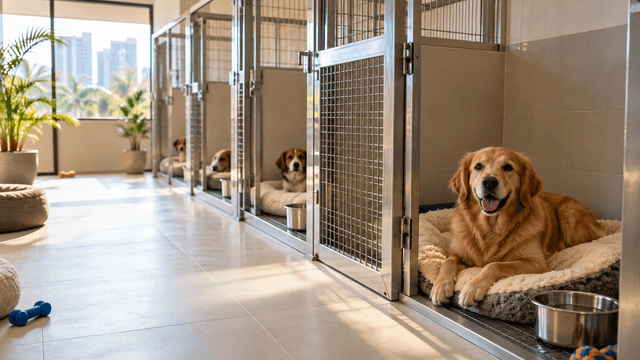
There are four realistic paths. Going through a registered NGO (Friendicoes in Delhi NCR, CUPA in Bengaluru, Welfare of Stray Dogs in Mumbai, Blue Cross of India in Chennai, People For Animals across several cities) is the most thorough route, since the dog is usually pre-vetted, often sterilised and vaccinated already, for a small fee. A municipal ABC (Animal Birth Control) sterilisation clinic in many cities also has post-sterilisation dogs available for adoption. Directly rescuing a community dog you already know, such as the one sleeping near your gate, is the most emotionally settled route but also the most logistically demanding, since none of the groundwork is done for you. And several NGOs run fostering-to-adoption programs that let you try the dog at home first.
For a first-time adopter, the NGO route is the one to start with: the animal's been observed, vet-checked, and the paperwork is ready to go.
Step 2: Before you bring the dog home
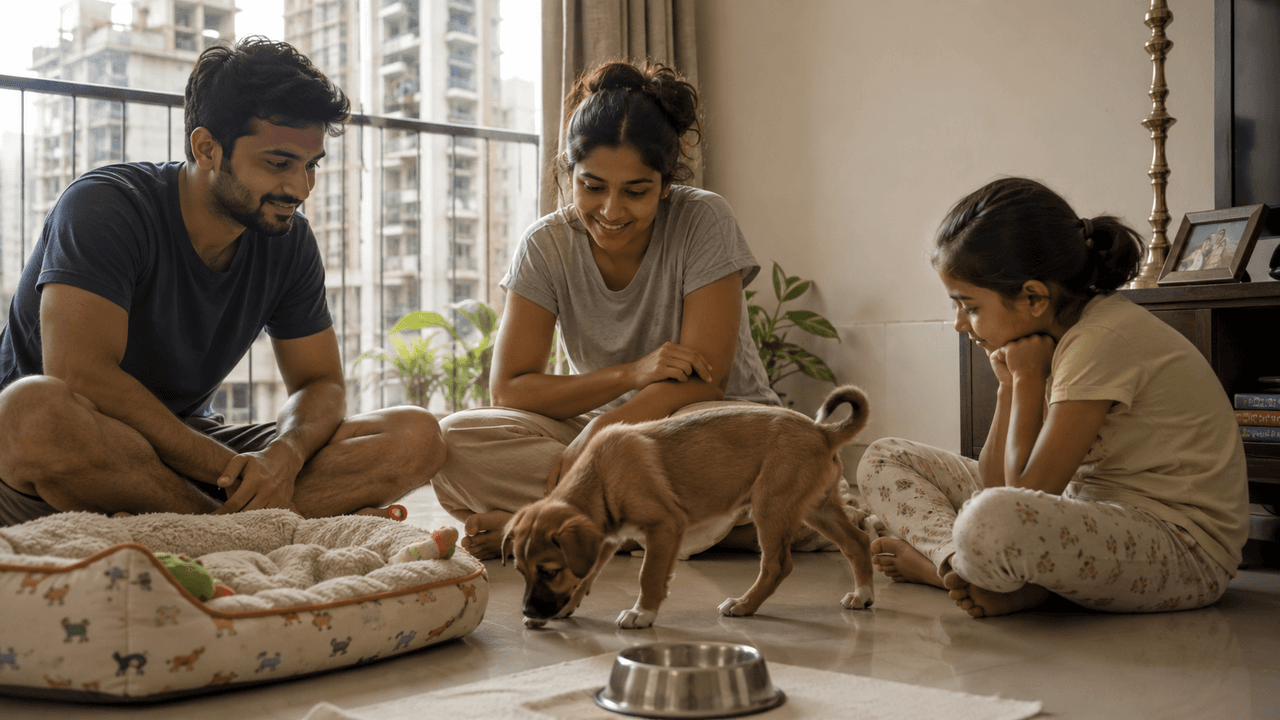
The pre-arrival checklist: a small, contained space (one room or a corner) where the dog can decompress for the first 24–72 hours; a flat-buckle collar and a 1.5m lead, no choke or prong collars; two stainless steel bowls for food and water; a simple cotton bed or thick mattress, ideally with old clothes on it that smell of you; a name tag with your phone number, engraved or screw-on; the number of a nearby vet who can see you within 24 hours; the same puppy or adult kibble the rescue or NGO was already feeding, to avoid gut upset from a sudden switch; and a realistic schedule for your first week that keeps someone home enough to help the dog settle.
If the animal you're adopting is under 6 months, read [stray puppy care in India](/articles/stray-puppy-care-india) as well, since puppies need a somewhat different first-week protocol.
Step 3: The first 48 hours
Quiet is the medicine here. Most ex-strays arrive over-aroused, exhausted, or shut down, and the instinct to introduce them to "everyone they'll live with" on the first evening is the single most common new-adopter mistake. Let the dog explore the room at their own pace, sit on the floor rather than looming over them, offer water immediately and food after an hour or two, skip the bath for the first 48 hours unless it's genuinely necessary, keep visitors to one or two household members, and sleep nearby the first night if you can.
Step 4: The first vet appointment
Book this within 48 hours of bringing the dog home. The vet will typically do a full physical exam (body condition, dental, ears, skin, eyes), start deworming with a broad-spectrum oral dewormer (fenbendazole or praziquantel-based combinations are common; the vet will pick based on the dog's parasite load), apply a tick-flea preventive (topical or oral, such as Bravecto, NexGard, Frontline), assess vaccination needs (most ex-strays need the core schedule: rabies, which is mandatory, and DHPPi+L covering Distemper, Hepatitis, Parvovirus, Parainfluenza and Leptospira, with boosters at vet-defined intervals), run a stool sample for hidden parasites, check sterilisation status via ear notch (a left-ear notch under ABC means the dog is already sterilised; otherwise it gets scheduled for after settling-in), and likely recommend a microchip, which is becoming close to standard for adopted dogs in metros.
Budget ₹2,500–₹6,000 for this first visit including diagnostics, depending on city tier and what the dog actually needs.
Step 5: Vaccination and first-week medical schedule
For an adult dog of unknown vaccination status, the standard practical schedule looks like this:
Day | Action |
|---|---|
Day 0–2 | Vet check, deworming dose 1, tick-flea preventive applied |
Day 7 | First DHPPi+L vaccination (if no prior record) |
Day 14 | Deworming dose 2 (more often for puppies) |
Day 28 | DHPPi+L booster + Rabies vaccination |
Day 56 | Final booster as advised |
Annually | Booster vaccination + parasite review |
Treat this as a planning template: your vet will adjust it to the individual dog in front of them.
Step 6: The legal and social bits
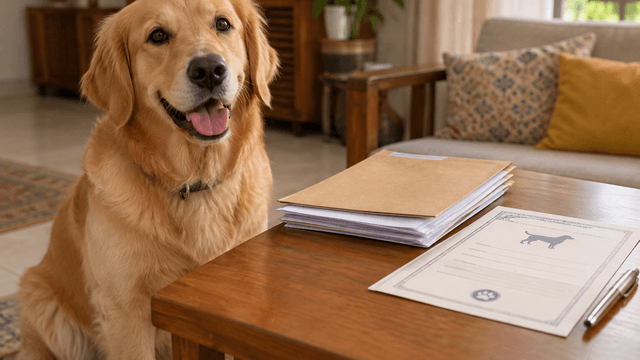
Owning a pet dog doesn't require national registration in most states, but several municipal corporations (Delhi, Mumbai, Bengaluru, Hyderabad) require dog licensing, so check your local corporation's site. Rabies vaccination is mandatory for any owned dog under public-health rules. If your adopted dog came through an ABC programme, hold on to the ear-notch evidence and any documentation. Feeding community dogs is legally protected under Animal Welfare Board of India (AWBI) guidelines, and RWAs can't blanket-ban it, though they may regulate where it happens. And the Prevention of Cruelty to Animals Act, 1960 protects both pets and strays from abuse.
If your RWA pushes back on your adopted dog, a calm reference to AWBI guidelines plus your dog's vaccination and ABC paperwork usually settles it, since most "stray dog" RWA objections turn out to be misinformation rather than an actual rule.
Step 7: What to budget for the first year
Cost head | Metro (₹) | Tier-2 city (₹) |
|---|---|---|
Adoption / rehoming fee | 0–1,500 | 0–500 |
First vet visit + diagnostics | 2,500–6,000 | 1,500–4,500 |
Complete first-year vaccinations | 3,500–6,000 | 2,500–4,500 |
Sterilisation (if not done) | 4,000–9,000 | 2,500–6,000 |
Monthly food (good kibble + fresh additions) | 1,500–3,500 | 1,200–2,500 |
Annual deworming + tick-flea | 2,500–4,500 | 1,800–3,500 |
Bed, bowls, lead, kit | 2,000–5,000 | 1,500–3,500 |
Optional pet insurance | 500–7,500/yr | 500–7,500/yr |
First-year total estimate | 22,000–55,000 | 15,000–40,000 |
For insurance see [HDFC ERGO Paws n Claws](/articles/hdfc-ergo-paws-n-claws-review) and the broader question of [whether pet insurance is worth it in India](/articles/is-pet-insurance-worth-it-india).
Step 8: Behaviour, not just biology
The most underestimated part of stray adoption is patience with the dog's history. An ex-stray may be food-protective for the first 2–4 weeks: don't punish it, manage it. They may be scared of brooms, sticks, men in uniform, or motorbikes, and that takes patience to work through. Separation distress in the first 2–6 months is common. And basic indoor cues (toilet, place, recall) often need to be taught from scratch, kindly.
Most of this resolves with 3–6 months of consistent, calm handling. If you're dealing with a reactive case, look for a force-free trainer rather than a corrections-based one. If you're seeing genuine aggression, bring in a vet behaviourist early. It's usually fixable, but not by guessing your way through it.
When to see a vet
Watch closely during the first month, and go promptly for persistent vomiting or diarrhoea beyond 12–24 hours, refusal to eat for over 24 hours, bleeding from any opening, sudden lethargy, weakness or collapse, a worsening cough, visible engorged ticks that aren't resolving with the prescribed preventive, or any wounds, abscesses or eye discharge.
FAQ
Sadak ke kutte ko ghar laana hai, sabse pehle kya karna chahiye? (सड़क के कुत्ते को घर लाना है, सबसे पहले क्या करना चाहिए?)
Sabse pehle vet ke paas le jaaiye 48 ghante ke andar. Deworming, tick-flea preventive aur full physical check zaroori hai. Phir DHPPi+L aur rabies vaccination schedule shuru karwaaiye. Pehle 48 ghante shaant kamre mein settle hone dijiye, bahot saare log usse milne bulane se pehle din hi bachiye.
Is it legal to take a community dog home in India?
Yes. There's no law against bringing a community dog home in India, provided the dog is treated humanely, vaccinated against rabies, and licensed where your municipality requires it. The Prevention of Cruelty to Animals Act and AWBI guidelines protect both the pet and the owner.
How much does it cost to adopt a stray dog in India?
The adoption fee itself is usually ₹0–₹1,500 depending on the NGO. First-year total cost (vet visits, vaccinations, deworming, parasite prevention, sterilisation if needed, food, kit and optional insurance) comes to roughly ₹22,000–₹55,000 in metros and ₹15,000–₹40,000 in tier-2 cities.
Should I adopt a stray puppy or an adult stray?
Both work, with different trade-offs. Puppies are easier to socialise but need much more time and a full vaccination course. Adults tend to be more medically stable and often already sterilised, but may carry trauma that takes months to settle. First-time adopters often do better with a young adult, 1–3 years old, from an NGO than a newly weaned puppy.
My RWA is objecting to my newly adopted indie: what do I do?
Stay calm and carry documentation: the dog's vaccination card, sterilisation evidence (ABC ear notch or certificate), and a printed reference to AWBI guidelines on pet ownership and community-dog feeding. Most RWA pushback resolves with paperwork alone. You do have legal protection if it escalates, but documentation is almost always enough on its own.
How long does a stray dog take to settle in?
The "3-3-3 rule" is a useful rule of thumb: 3 days to decompress, 3 weeks to learn your routine, 3 months to genuinely feel at home. Some ex-strays settle in two weeks; some take six months. Patience is the input you control; the dog handles the rest.
Sources
Animal Welfare Board of India (AWBI) pet ownership and community-dog guidelines; WSAVA global vaccination guidelines applicable to adopted dogs; Friendicoes, CUPA, Welfare of Stray Dogs and Blue Cross of India adoption protocols; The Prevention of Cruelty to Animals Act, 1960 (India).
A note from Critzo (please read): This article is general educational information written and reviewed by qualified veterinary professionals for Indian pet parents. It is not a substitute for an in-person consultation with your own veterinarian, who knows your pet, their history, and their current clinical state. Pets are individuals — breed, age, weight, pre-existing conditions, medications, and local disease patterns all change what is safe and what is not. Do not start, stop, or change any medication, vaccination schedule, diet, or treatment based on what you read here without first speaking to a registered veterinary practitioner. If your pet is showing emergency signs — collapse, seizure, severe bleeding, suspected poisoning, breathing difficulty, bloated abdomen, repeated vomiting or no urination for more than 12 hours — stop reading and go to the nearest 24-hour veterinary hospital immediately. You follow any guidance from this article at your own risk and at your pet's risk. Critzo, its authors, and its reviewers accept no liability for outcomes arising from decisions made without veterinary supervision.