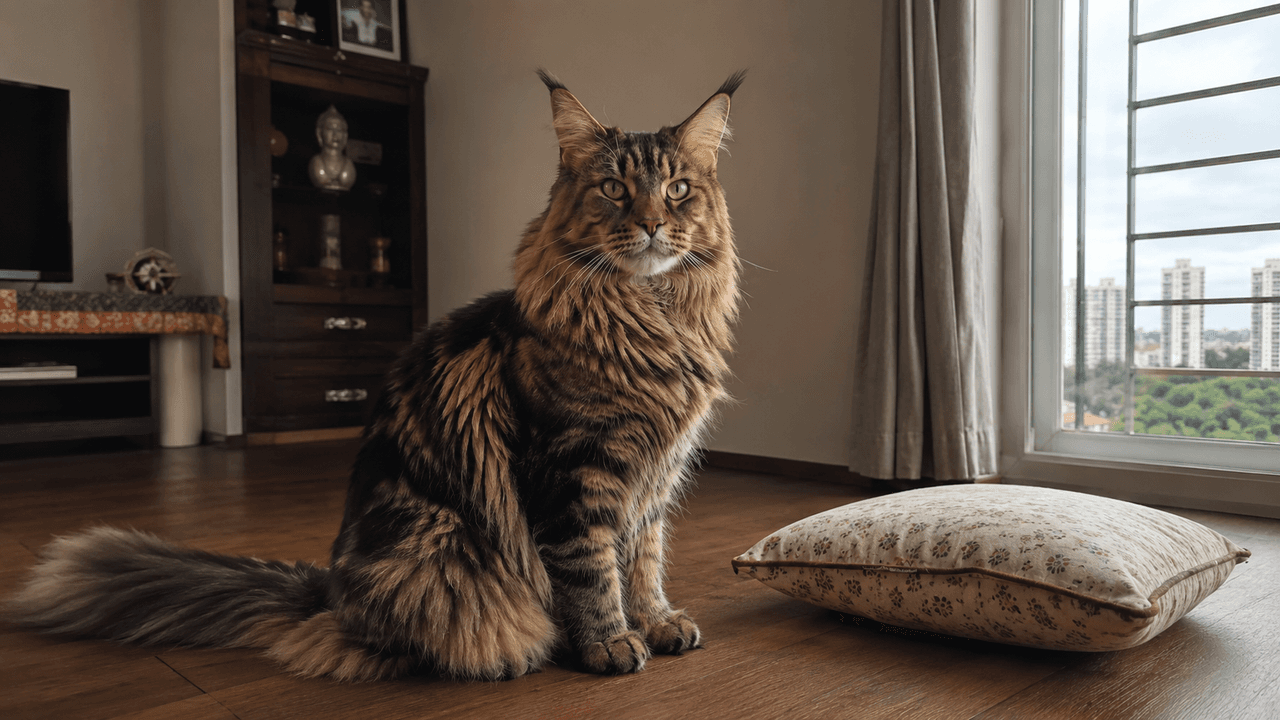
A genuine Maine Coon kitten costs roughly ₹40,000–₹2,50,000 in India in 2026, making it one of the most expensive cat breeds in the country. Metro prices typically sit between ₹60,000 and ₹1,50,000 for pet quality, with show-quality and rare colour patterns crossing ₹2 lakh. Budget ₹3,500–₹7,000 a month for upkeep, plus periodic cardiac screening.
Why this matters in India
Maine Coons are the cat the internet sold to India. Their size, dog-like personality, dense coat and sheer photogenicity have driven explosive demand since 2022, and supply has scrambled to keep pace. The result is a wide, frankly confusing price band, with "Maine Coon" kittens advertised anywhere from ₹15,000 to ₹3 lakh. Most of the cheap ones turn out to be misrepresented Norwegian Forest Cat mixes, Persian-Coon crosses, or large semi-longhair domestics wearing the name. This guide walks through what a real Maine Coon actually costs, what to ask a breeder, and whether the climate-and-care commitment makes sense for your home.
Maine Coon price in India by city
City | Pet-quality (₹) | Show-quality (₹) | Notes |
|---|---|---|---|
Mumbai | 70,000–1,50,000 | 1,50,000–2,50,000+ | Concentrated reputable breeders |
Bengaluru | 70,000–1,40,000 | 1,40,000–2,20,000 | Growing serious cattery presence |
Delhi NCR | 65,000–1,30,000 | 1,30,000–2,00,000 | Wide spread, due diligence essential |
Hyderabad | 55,000–1,20,000 | 1,20,000–1,90,000 | Steady demand |
Pune | 55,000–1,15,000 | 1,15,000–1,80,000 | Metro-adjacent pricing |
Chennai | 50,000–1,10,000 | 1,10,000–1,80,000 | Cooler-coastal advantage |
Kolkata | 40,000–95,000 | 95,000–1,60,000 | Lower mean |
Other tier-2 | 35,000–90,000 | 90,000–1,50,000 | Limited reputable supply |
A "Maine Coon" listed at ₹15,000–₹25,000 is almost never a registered, pedigreed one. It's much more often a mixed-breed semi-longhair from a backyard breeder. The look might be there. The breed usually isn't. Treat anything under ₹35,000 with caution and ask for full parentage verification.
What actually moves the kitten price?
Registered pedigree (CFA / TICA papers) is the single biggest lever, pushing price up 60–120%. After that: coat colour and pattern (brown classic tabby is mid-range; silver, smoke, blue, polydactyl and rare patterns push the premium), eye colour (copper or rare hues lift it further), bloodline and cattery reputation (known international or established Indian catteries charge more, usually fairly), whether the parents have been HCM-screened (a cardiac ultrasound clearance genuinely makes a kitten both more valuable and a much safer buy, more on this below), age within the safe 12-week+ window, and vaccination and health-screening status.
Are Maine Coons suited to Indian climate?
Better than you might expect, and better than a Persian, but not without effort. The Maine Coon's dense, semi-water-resistant double coat was bred for the cold north-eastern US. In cooler tier-2 and elevated cities (Pune, Bengaluru, Shimla, parts of Hyderabad), Maine Coons genuinely do fine year-round with modest cooling. In hot metros and coastal humidity (Mumbai, Chennai, Delhi summers), air-conditioned indoors during April–June is non-negotiable, and daily grooming through monsoon prevents matting and fungal infection.
One genuine advantage: Maine Coons aren't flat-faced, so unlike Persians or Pugs, they breathe normally. Their heat sensitivity is coat-driven, not airway-driven, which puts them ahead of a [Persian cat](/articles/persian-cat-price-in-india) on ease-of-keeping in a hot city, even though they're heavier to groom.
How much does a Maine Coon cost monthly?
Cost head | Metro (₹) | Tier-2 city (₹) |
|---|---|---|
Monthly food (premium cat kibble + wet) | 2,500–4,500 | 2,000–3,500 |
Cat litter (Maine Coons use a lot) | 1,000–2,000 | 700–1,500 |
Grooming (brush 4x/week + monthly groom) | 1,200–3,000/visit | 800–2,200/visit |
Annual vaccination + booster | 1,800–3,500 | 1,200–2,800 |
Annual deworming + parasite prevention | 1,800–3,500 | 1,200–2,800 |
Cardiac (HCM) screening once every 1–2 years, adult | 3,000–8,000 | 2,500–6,000 |
Optional pet insurance | 700–8,000/yr | 700–8,000/yr |
Maine Coons keep growing until 3–4 years old and reach 6–10 kg as adults, so yes, the food line item is genuinely that high. For insurance see [HDFC ERGO Paws n Claws](/articles/hdfc-ergo-paws-n-claws-review).
Maine Coon temperament
This is the part the internet got right. Maine Coons are dog-like in attachment: they'll greet you at the door, follow you room to room, and learn their name. They're vocal but not in the Siamese sense, more chirps and trills than yowls. They stay intelligent and playful well into adulthood, enjoying puzzle feeders and water play, and they're tolerant of children and other pets when socialised early. They're not lap cats by default, though: they want to be near you, not necessarily on you.
The real trade-off is presence. A 9 kg cat takes up genuine real estate, so climbing furniture and litter trays need to be sized for the breed, not the standard kit from a pet store.
Maine Coon health issues in India
Hypertrophic Cardiomyopathy (HCM) is a heritable heart muscle disease and the single biggest reason to buy from a breeder whose parent cats have cardiac ultrasound clearance. Hip dysplasia is a real risk given the large body, and keeping a lean weight helps. Spinal Muscular Atrophy (SMA) is heritable and DNA-testable through reputable catteries. Polycystic Kidney Disease is less common here than in Persians but still worth screening for. Dental disease tracks with size, so regular brushing matters. And heat stress with matting is climate-and-grooming driven rather than genetic.
The single best protective decision for a Maine Coon's lifetime health is which breeder you choose: a cattery that screens for HCM and SMA is worth whatever premium it charges.
How to buy a Maine Coon kitten safely
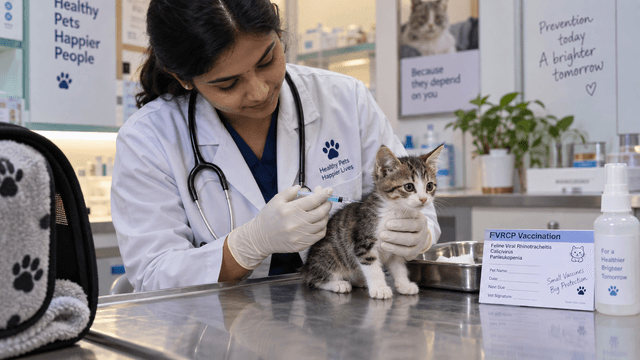
See the kitten with its mother, ideally the father too. Ask for HCM ultrasound clearance of at least one parent within the last 12 months. Get a signed vaccination card with dates and vaccine brands. Verify pedigree papers if claimed, such as CFA, TICA, or recognised Indian cattery registration. And confirm a 7-day vet-check return policy before you commit.
Take the kitten to a vet within 48 hours of bringing it home. A first-week check catches issues early, before they become bigger and more expensive ones.
When to see a vet
Go promptly for persistent open-mouth or laboured breathing (a possible cardiac sign), lethargy and reduced activity beyond a day, vomiting or diarrhoea lasting more than 24 hours, loss of appetite beyond 24 hours, severe matting especially around the rear, or sudden hind-leg weakness or reluctance to jump.
Adult Maine Coons should get an annual vet check plus a cardiac screen at year one, then every 1–2 years after that.
FAQ
What is the real price of a Maine Coon in India?
A genuine, registered, pet-quality Maine Coon kitten costs roughly ₹40,000–₹1,50,000 in India in 2026, with show-quality and rare colours going higher. Anything under ₹35,000 advertised as a "Maine Coon" is most often a mixed-breed semi-longhair. Pedigree papers, HCM-screened parents and breeder reputation drive the price.
Maine Coon India ke garmi mein survive kar sakta hai? (मेन कून भारत की गर्मी में जीवित रह सकता है?)
Haan, lekin proper care ke saath. AC peak summer mein zaroori hai, daily grooming monsoon mein zaroori hai, aur outdoor afternoons bilkul nahi. Maine Coon Persian se actually thoda zyada heat-tolerant hai kyunki uska face flat nahi hai, saans normally leta hai, par coat ki wajah se garmi feel zyada karta hai.
Is a Maine Coon good for first-time cat owners?
Yes, surprisingly so. Maine Coons are forgiving, social, dog-like, and not nearly as fussy as Persians. The non-negotiables are budget (for the kitten itself and the ongoing grooming, food and cardiac screening) and a climate-managed home. Get those two things right and a Maine Coon is one of the easier cats to live with.
How big do Maine Coons get in India?
They reach full size at 3–4 years, with adult males commonly 7–10 kg and females 4.5–7 kg. The body length of 90–110 cm nose to tail surprises most new owners. A standard litter tray and cat tree are usually too small, so buy Maine Coon-sized from the start.
What food is best for a Maine Coon in India?
A complete-and-balanced large-breed or Maine Coon-specific kibble, life-stage appropriate, with wet food two or three times a week. Royal Canin has a Maine Coon-specific line; mid-tier alternatives work fine for healthy adults. Skip milk, raw chicken without veterinary supervision, and unbalanced home-only diets.
How long do Maine Coons live?
Well-cared-for Maine Coons live 12–15 years, with HCM-clear bloodlines and good preventive care sometimes reaching 16+. HCM is the leading cause of premature death in the breed, which is exactly why parent screening matters so much.
Sources
International Cat Care (iCatCare) breed welfare and grooming guidance; MSD Veterinary Manual HCM, hip dysplasia and SMA reference data; CFA and TICA Maine Coon breed standards; WSAVA vaccination and nutrition guidelines.
A note from Critzo (please read): This article is general educational information written and reviewed by qualified veterinary professionals for Indian pet parents. It is not a substitute for an in-person consultation with your own veterinarian, who knows your pet, their history, and their current clinical state. Pets are individuals — breed, age, weight, pre-existing conditions, medications, and local disease patterns all change what is safe and what is not. Do not start, stop, or change any medication, vaccination schedule, diet, or treatment based on what you read here without first speaking to a registered veterinary practitioner. If your pet is showing emergency signs — collapse, seizure, severe bleeding, suspected poisoning, breathing difficulty, bloated abdomen, repeated vomiting or no urination for more than 12 hours — stop reading and go to the nearest 24-hour veterinary hospital immediately. You follow any guidance from this article at your own risk and at your pet's risk. Critzo, its authors, and its reviewers accept no liability for outcomes arising from decisions made without veterinary supervision.