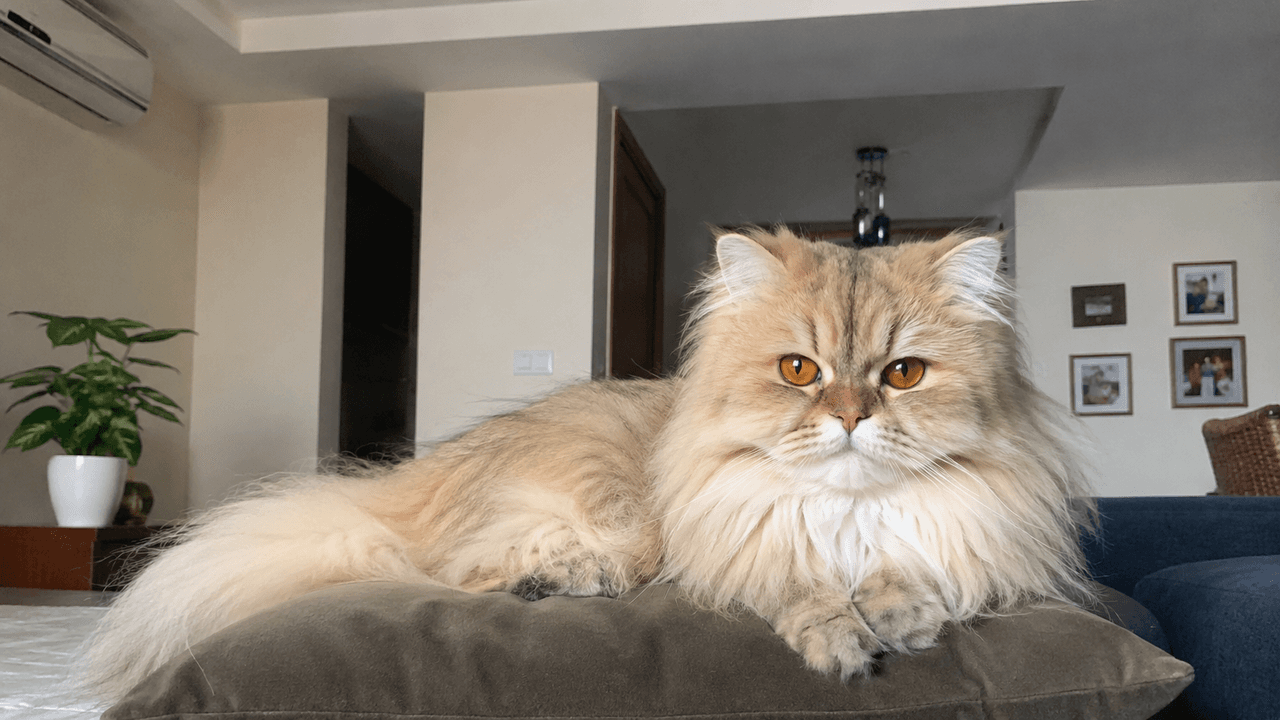
A Persian cat kitten costs roughly ₹8,000–₹40,000 in India in 2026: metros typically ₹15,000–₹40,000, tier-2 cities ₹8,000–₹25,000. Doll-face Persians cost less than the extreme punch-face show type; pedigree papers, vaccination status and coat colour push the upper end. Budget another ₹2,500–₹6,000 a month for upkeep on top of the sticker price.
Why this matters in India
Persians are India's most-searched cat breed, and going by TGM survey data, the most-preferred one too, which also makes them the most-bred, most-misrepresented, and most impulse-bought. Scroll through any Indian classifieds page and you'll find "Persian kittens" going for ₹3,000, usually Persian-mix street kittens with no vaccination record, no known parentage, and often a brewing eye infection nobody mentioned. The real price band is wider than what the marketing copy suggests, and the ongoing costs (grooming, eye care, monsoon coat maintenance, brachycephalic complications) end up mattering more than what you paid upfront. This is the version I wish every first-time Persian owner read before handing over cash.
Persian cat price in India by city
Real-world ranges from breeder networks and rescue ecosystems across the country:
City | Pet-quality kitten (₹) | Show-quality kitten (₹) | Notes |
|---|---|---|---|
Mumbai | 18,000–35,000 | 35,000–80,000+ | Highest demand; reputable breeders cluster here |
Delhi NCR | 15,000–32,000 | 30,000–70,000 | Wide spread; do your due diligence |
Bengaluru | 15,000–30,000 | 30,000–65,000 | Mid-band steady |
Hyderabad | 12,000–28,000 | 28,000–60,000 | Growing market |
Pune | 12,000–26,000 | 26,000–55,000 | Tier-2 pricing, metro demand |
Chennai | 12,000–25,000 | 25,000–55,000 | Strong cat culture |
Kolkata | 10,000–22,000 | 22,000–50,000 | Lower mean |
Jaipur / Lucknow / Ahmedabad | 8,000–20,000 | 20,000–45,000 | Tier-2 baseline |
These ranges are for live kittens bought from breeders or reputable homes, not the ₹3,000 classifieds listings, which are almost never genuine Persians. A pet-quality Persian under ₹8,000 anywhere in India today is worth a second look; under ₹5,000 is almost always a misrepresented mix.
What actually moves the price?
Roughly in order of how much they matter:
- Pedigree and papers: registered parents (CFA / TICA / KCI cat division) push the price up significantly
- Face type: extreme punch-face / peke-face Persians cost more, and also have more health problems, more on that below
- Coat colour and pattern: solid white blue-eyed, silver-shaded, golden-shaded and bi-colour sit at the premium end; pointed/Himalayan colours are mid
- Eye colour: deep copper or blue eyes lift the price a bit
- Age: younger kittens (past the safe 12-week minimum) tend to cost more; older kittens are often discounted
- Vaccination and sterilisation status: a properly vaccinated kitten costs more and is worth the difference
- Bloodline and breeder reputation: a known cattery charges a premium, and usually earns it
Doll-face vs punch-face Persian
This is where vet judgement matters more than marketing copy. Persians come in two broad face types.
Doll-face (the traditional look) has a longer muzzle, less extreme brachycephalia, and normal-sized nostrils, which makes it healthier overall, with lower lifetime vet bills. Punch-face or peke-face (the modern show type) is flatter, with a heavily compressed muzzle, smaller nostrils, and often prominent tearing around the eyes.
The punch-face is what most people picture when they search "Persian cat," but it's the same underlying structural problem that gives Pugs and Bulldogs their breathing trouble. Punch-face Persians are prone to brachycephalic obstructive airway syndrome (noisy breathing, low exercise tolerance, heat sensitivity, a real issue in a 40°C+ Indian summer), chronic eye discharge and corneal ulcers, dental crowding, and birthing difficulty in queens.
If you're buying a Persian, the doll-face is almost always the kinder choice, and cheaper over a lifetime too. Most reputable Indian breeders will talk you through this trade-off honestly; if one can't or won't, take that as a signal.
How much does a Persian cost monthly in India?
The sticker price is just the down payment. Budget for these recurring costs:
Cost head | Metro (₹) | Tier-2 city (₹) |
|---|---|---|
Monthly food (good cat kibble + wet) | 1,800–3,500 | 1,400–2,500 |
Cat litter (clumping, 7–10 kg/month) | 600–1,200 | 500–900 |
Grooming (daily brush + monthly professional groom) | 800–2,500/visit | 500–1,800/visit |
Vet annual booster + check-up | 1,500–3,000 | 1,000–2,500 |
Annual deworming + parasite prevention | 1,500–3,000 | 1,200–2,500 |
Optional pet insurance | 500–7,500/yr | 500–7,500/yr |
Punch-face Persians add ophthalmology visits roughly every 3–6 months, and long-coat Persians genuinely need a professional groom every 4–6 weeks during monsoon to keep matting and skin fungal infections at bay, and that's what mostly moves the range above. For insurance, see our review of [HDFC ERGO Paws n Claws](/articles/hdfc-ergo-paws-n-claws-review), which covers cats, and the broader question of [whether pet insurance is worth it in India](/articles/is-pet-insurance-worth-it-india).
Are Persian cats suited to Indian climate?
They tolerate it, they don't love it. A Persian's heavy double coat was bred for the cool Iranian highlands, not a 42°C Pune summer. With the right home, the right breed type and consistent care, a Persian does fine in India, but the climate burden is real: AC during peak summer, daily grooming, cool floor access, hydration support, and no outdoor afternoons are non-negotiable, not optional extras.
If climate suitability is your main worry, a doll-face Persian with good ventilation, a [Bombay cat](/articles/bombay-cat-price-in-india), or a [Maine Coon](/articles/maine-coon-price-in-india) in a cooler tier-2 city all sit on an easier gradient than a punch-face Persian in coastal humidity.
How to buy a Persian kitten safely
Five questions that separate a real breeder from a backyard operation:
- Can I see the kitten with its mother? A yes is non-negotiable.
- What vaccinations has the kitten had, and on what dates? You should get a signed vaccination card, not a verbal promise.
- Has the kitten been dewormed? Multiple times, age-appropriate.
- What's the kitten's diet? A specific, consistent answer suggests real husbandry.
- What's the return policy if a vet check within 7 days finds something wrong?
Take any kitten you buy or adopt to a vet within 48 hours of bringing it home. That first-week check catches cat flu (FCV/FHV), early ear mites, parasites, and congenital issues before they become bigger problems. Skipping it is the one shortcut that regularly costs people the most.
When to see a vet
Persians hide illness well, which is exactly why the threshold for calling a vet should be low. Book a visit if you see eye discharge that doesn't clear with daily wiping, persistent noisy or open-mouth breathing, sneezing lasting more than 48 hours, appetite loss beyond 24 hours, vomiting more than twice in a day (or any vomiting in a kitten), constipation, diarrhoea or no urination, severe matting near the rear, or hiding behaviour that's out of character for that cat.
Adult Persians do well with an annual check; senior Persians (8+) benefit from six-monthly visits instead.
FAQ
What is the cheapest Persian cat price in India?
Genuine pet-quality Persian kittens generally start around ₹8,000–₹12,000 in tier-2 cities and ₹12,000–₹18,000 in metros. Anything cheaper is almost always a misrepresented mix or comes with hidden problems: no vaccination, weaning too early, or an undeclared eye or respiratory condition.
Punch face Persian vs doll face Persian: kaunsa lena chahiye? (पंच फेस या डॉल फेस, कौन-सा लेना चाहिए?)
Doll face, bilkul. Punch face dekhne mein cute lagta hai, par saans, aankh aur dental problems zyada hoti hain, Indian garmi mein aur bhi zyada. Doll face zyada healthy, kam vet bills, aur character mein koi farak nahi. Long-term mein doll face hi sasta aur zyada insaaf bhara choice hai.
Is a Persian cat good for first-time Indian owners?
It can be, if you understand the time and grooming commitment. Daily 10-minute brushing, monthly professional grooming (more during monsoon), AC during peak summer, and a willingness to handle eye care: these aren't optional. If any of that feels unrealistic for your household, a short-haired Bombay or Indian domestic cat is a fairer bet.
How long do Persian cats live in India?
Well-cared-for Persians typically live 12–17 years, with doll-face Persians usually outliving punch-faces. Climate management, vaccination, dental care, weight control, and prompt response to eye or breathing changes are what actually move that number.
Can Persian cats live in hot Indian cities like Hyderabad or Chennai?
Yes, with care. Air-conditioned indoors during the April–June peak, no outdoor afternoons, fresh water in multiple spots, cool sleeping areas, and lighter feeding through the hottest weeks. Heat stroke is a genuine risk in Persians, so open-mouth breathing or lethargy on a hot day should be treated as urgent, not "let's watch and see."
What food is best for a Persian cat in India?
A complete-and-balanced, life-stage-appropriate cat kibble with wet food two or three times a week works for most Persians. Persian-specific kibbles exist with a kibble shape designed for their jaw. Skip milk, raw chicken without veterinary supervision, fish-only diets, and home-cooked-only meals unless a veterinary nutritionist has balanced them.
Sources
WSAVA Global Nutritional and Vaccination Guidelines; International Cat Care (iCatCare) breed welfare and brachycephalic standards; MSD Veterinary Manual breed-specific health conditions; CFA and TICA breed standard references.
A note from Critzo (please read): This article is general educational information written and reviewed by qualified veterinary professionals for Indian pet parents. It is not a substitute for an in-person consultation with your own veterinarian, who knows your pet, their history, and their current clinical state. Pets are individuals — breed, age, weight, pre-existing conditions, medications, and local disease patterns all change what is safe and what is not. Do not start, stop, or change any medication, vaccination schedule, diet, or treatment based on what you read here without first speaking to a registered veterinary practitioner. If your pet is showing emergency signs — collapse, seizure, severe bleeding, suspected poisoning, breathing difficulty, bloated abdomen, repeated vomiting or no urination for more than 12 hours — stop reading and go to the nearest 24-hour veterinary hospital immediately. You follow any guidance from this article at your own risk and at your pet's risk. Critzo, its authors, and its reviewers accept no liability for outcomes arising from decisions made without veterinary supervision.