A Pomeranian puppy costs roughly ₹5,000–₹30,000 in India in 2026: metros typically ₹12,000–₹30,000, tier-2 cities ₹5,000–₹18,000. Pedigree papers, coat colour, age and breeder reputation push the upper end. Budget ₹2,000–₹4,500 a month for upkeep, and be wary of "teacup" Pomeranians and suspiciously cheap classifieds listings.
Why this matters in India
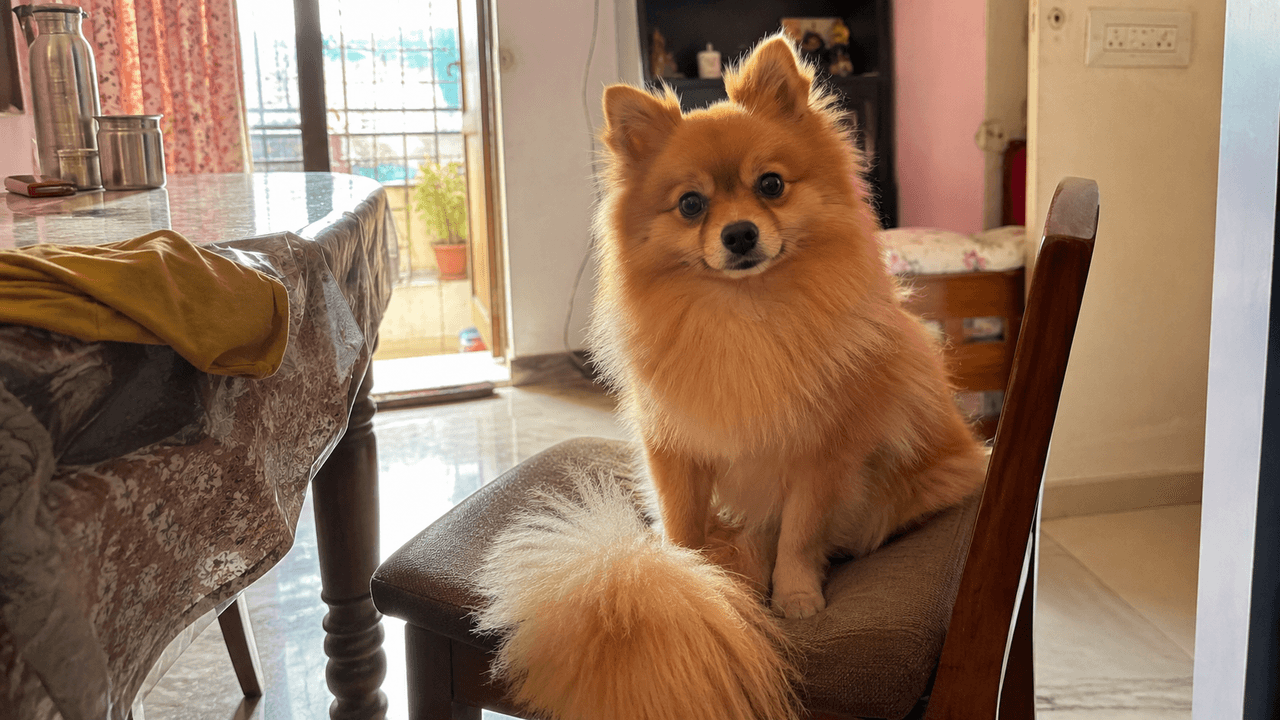
The Pomeranian and the Indian Spitz are two of the most confused dogs on Indian classifieds. That "white Pomeranian" going for ₹3,000 in a lot of tier-2 markets is almost always an Indian Spitz, a separate breed and a genuinely lovely dog, just not a Pomeranian. The real Pomeranian is a small, German-origin Spitz-type breed weighing 1.9–3.5 kg as an adult, distinct in build and care needs. This guide gives you the honest price band, flags the common mis-sales, and tells you what to actually budget across a Pom's 12–14 years in an Indian home.
Pomeranian price in India by city
Real-world ranges for genuine pet-quality Pomeranian puppies in 2026:
City | Pet-quality (₹) | Show-quality (₹) | Notes |
|---|---|---|---|
Mumbai | 15,000–28,000 | 28,000–55,000 | Premium for solid orange / cream |
Delhi NCR | 14,000–26,000 | 25,000–50,000 | Largest supply, do due diligence |
Bengaluru | 12,000–25,000 | 24,000–45,000 | Mid-band |
Hyderabad | 10,000–22,000 | 22,000–40,000 | Growing market |
Pune | 10,000–22,000 | 22,000–40,000 | Tier-2 pricing, metro demand |
Chennai | 10,000–20,000 | 20,000–38,000 | Steady |
Kolkata | 8,000–18,000 | 18,000–35,000 | Lower mean |
Jaipur / Lucknow / Ahmedabad | 6,000–15,000 | 15,000–30,000 | Tier-2 baseline |
A genuine Pomeranian under ₹5,000–₹7,000 anywhere in India is almost always either an Indian Spitz mis-sold as a Pom, or an unvaccinated puppy from a backyard breeder. Either way, the money you save now tends to show up later as a vet bill.
What actually moves the puppy price?
Confirm parentage first: a real Pom is small, foxy-faced, with a dense double coat and a plumed tail carried over the back. Beyond that: coat colour matters (orange and cream are mid-range; blue merle, lavender and parti-colour command a premium and sometimes come with genetic baggage), pedigree papers add 30–60% via KCI registration, younger puppies within the safe 8-week+ window sell higher, properly vaccinated puppies are worth the extra cost, and known catteries or kennels charge more, usually fairly. One more thing worth knowing: "teacup" labelling is pure marketing, not a real category, and it's covered separately below.
The "teacup" Pomeranian warning
There's no recognised breed called a "teacup Pomeranian." The label is marketing for either a genuine Pomeranian deliberately bred undersized (which is a welfare concern) or simply a puppy that hasn't finished growing yet. Undersized Poms can carry hypoglycaemia, dental crowding, fragile bones, and a higher risk of luxating patella. A breeder advertising "teacup" or charging extra for "smallest size" is a red flag worth walking away from.
How much does a Pomeranian cost monthly in India?
Cost head | Metro (₹) | Tier-2 city (₹) |
|---|---|---|
Monthly food (small-breed kibble) | 1,200–2,500 | 900–1,800 |
Grooming (daily brush + professional groom every 6–8 weeks) | 600–1,800/visit | 400–1,400/visit |
Annual vaccinations + booster | 3,500–6,000 (year 1), 1,500–3,000 (annual) | 2,500–4,500 / 1,000–2,500 |
Annual deworming + tick-flea preventives | 2,500–4,500 | 1,800–3,500 |
Dental cleaning under anaesthesia (every 2–3 years) | 6,000–15,000 | 4,000–10,000 |
Optional pet insurance | 500–7,500/yr | 500–7,500/yr |
Pomeranians are notorious for dental disease, so daily brushing and scheduled professional dentals are the single biggest preventable cost over a Pom's life, and the main thing that swings this range. For insurance see our review of [HDFC ERGO Paws n Claws](/articles/hdfc-ergo-paws-n-claws-review).
Pomeranian temperament and Indian apartments
A Pomeranian is close to the ideal Indian apartment dog once the owner respects two quirks. First, it has a big-dog brain in a tiny body: Poms are alert, confident, and genuinely unaware they weigh 3 kg; they will challenge a Rottweiler without blinking, so socialise hard from 8–14 weeks. Second, they're vocal, and will bark at delivery boys, lifts, pigeons, leaves, and the general concept of strangers. That's a feature in a watchdog and a nuisance to your RWA, so training the bark on cue early heads off most complaints before they start.
Beyond that, they're affectionate, trainable, low-exercise (two 20-minute walks plus indoor play cover it), and perfectly content in a 1BHK.
Pomeranian health issues in India
A few things worth knowing the mechanism behind, not just the name: luxating patella is a kneecap slipping out of its groove, common in toy breeds and more so in small Poms: watch for a skipping gait. Dental disease shows up fast because of the small, crowded jaw; daily brushing is genuinely essential, not a nice-to-have. Tracheal collapse comes from soft tracheal rings, which is why a harness (never a collar pulling on the leash) matters. Alopecia X, sometimes called black skin disease, is a hair-loss syndrome that's cosmetic but stressful for the dog. Heat sensitivity comes from the dense double coat, meaning strict shade, water access, and no afternoon walks in a 40°C summer. And small-breed puppies can drop blood sugar fast, so hypoglycaemia is a real risk before 6 months; feed small, frequent meals till then.
Pomeranian vs Indian Spitz
If you liked the Pomeranian look but want a sturdier, India-evolved alternative (or you may already be looking at one without realising it), the Indian Spitz is genuinely worth considering. It's larger (10–20 kg), more heat-tolerant, healthier on the whole with fewer luxating patellas and less dental crowding, and cheaper both to buy and to keep.
A Pomeranian is the right dog if you specifically want the toy-breed character and the dense plumed coat. An Indian Spitz is the right dog if you wanted a small spitz-type but didn't realise the trade-offs going in. Neither is "lesser"; see also our guide to the [Indian Pariah dog](/articles/indian-pariah-dog) for the indie alternative.
When to see a vet
Call promptly for sudden lameness on a back leg or a "skipping" gait, persistent coughing or a honking cough (a possible tracheal collapse warning), refusal to eat for more than 12 hours (especially in puppies), vomiting, diarrhoea or weakness lasting beyond 12–24 hours, sudden collapse or seizure, heavy panting in heat, or bleeding gums with visible tartar build-up.
Puppies need the full first-year vaccination protocol, monthly deworming until 6 months, and a tick-flea preventive, so ask your vet to lay out the exact schedule for your puppy.
FAQ
Pomeranian ka real price kya hota hai India mein? (पोमेरेनियन की असली कीमत क्या है?)
Asli Pomeranian metros mein roughly ₹15,000–₹28,000 pet-quality ke liye padta hai, tier-2 cities mein ₹8,000–₹18,000. ₹3,000–₹5,000 mein milne wala "white Pomeranian" zyadatar Indian Spitz hota hai, galat naam se becha jata hai. Vaccination card aur parents dekhna zaroori hai.
Is the Pomeranian good for hot Indian cities?
It can be, with careful management. The dense double coat means high heat sensitivity: strict morning and evening walks only, shade, water, never left in a parked car, and no skipping the AC in peak afternoons. If you live in coastal humidity (Chennai, Mumbai) or peak-heat metros (Hyderabad, Delhi), build the day around the cool hours.
How long do Pomeranian dogs live?
Commonly 12–16 years, with smaller, well-managed dogs sometimes reaching 17. Dental care, weight control, harness use instead of a collar, and prompt attention to lameness or coughing are what protect that lifespan.
Do Pomeranians shed a lot?
Yes, and twice a year they "blow coat" heavily for 2–4 weeks. Daily brushing keeps the apartment manageable; once a week isn't enough during shedding season. They don't need shaving, since shaving a double-coated breed actually damages the coat and the skin's temperature regulation.
Are Pomeranians good with kids?
Cautiously yes, with two conditions: children old enough to handle a small dog gently (no picking up, no tail-pulling, since a Pom will defend itself), and a dog socialised with calm children from puppyhood. Households with toddlers should probably look at larger, sturdier breeds first.
Pomeranian ko kya khilana chahiye? (पोमेरेनियन को क्या खिलाना चाहिए?)
Small-breed kibble (life-stage appropriate) sabse seedha aur safe option hai. Puppy mein chhote-chhote frequent meals (3–4 baar) zaroori hain kyunki hypoglycaemia ho sakta hai. Adults ko din mein do baar khilana theek hai. Doodh, masala-bhara khana, cooked bones, chocolate, onion, garlic: bilkul nahi.
Sources
WSAVA Global Nutritional and Vaccination Guidelines; Kennel Club of India breed standard for the Pomeranian; MSD Veterinary Manual luxating patella, tracheal collapse and alopecia X reference data.
A note from Critzo (please read): This article is general educational information written and reviewed by qualified veterinary professionals for Indian pet parents. It is not a substitute for an in-person consultation with your own veterinarian, who knows your pet, their history, and their current clinical state. Pets are individuals — breed, age, weight, pre-existing conditions, medications, and local disease patterns all change what is safe and what is not. Do not start, stop, or change any medication, vaccination schedule, diet, or treatment based on what you read here without first speaking to a registered veterinary practitioner. If your pet is showing emergency signs — collapse, seizure, severe bleeding, suspected poisoning, breathing difficulty, bloated abdomen, repeated vomiting or no urination for more than 12 hours — stop reading and go to the nearest 24-hour veterinary hospital immediately. You follow any guidance from this article at your own risk and at your pet's risk. Critzo, its authors, and its reviewers accept no liability for outcomes arising from decisions made without veterinary supervision.