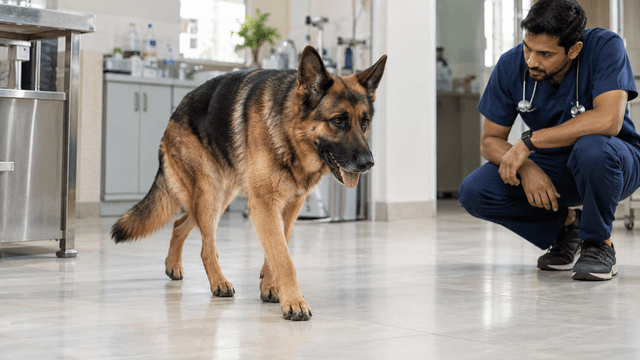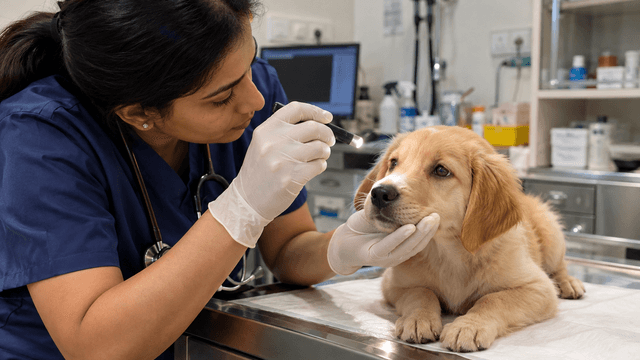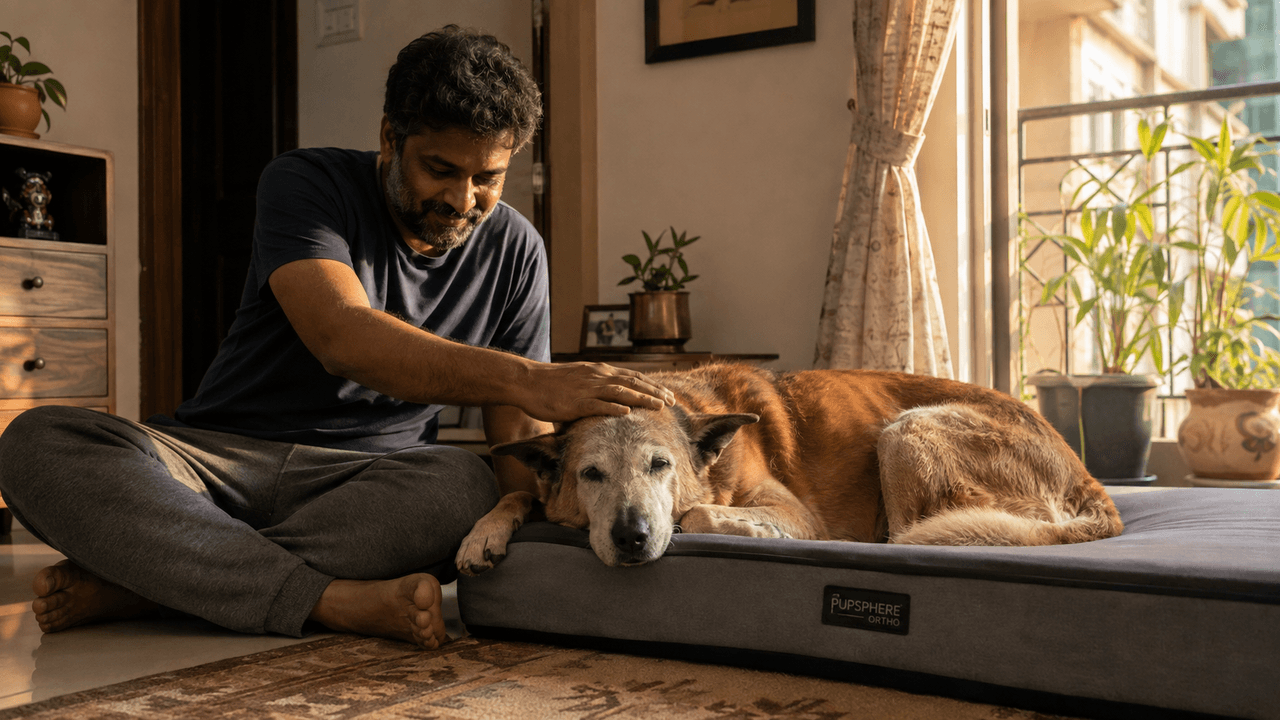
An Indian dog is generally considered senior from age 7 (large breeds from 6, small breeds from 8). Senior care means six-monthly vet checks, joint and dental focus, lower-calorie diet adjustment, climate-aware exercise, and a calmer home routine. The goal is comfortable years, not just more years: small adjustments add up to meaningful quality-of-life gains.
Why this matters in India
The first generation of Indian middle-class pet dogs is now ageing. The Labrador adopted in 2017 is now nine. The indie in your neighbourhood you have fed for years is now twelve. India has more senior dogs than ever before, and the standard of care for them is genuinely different from a healthy three-year-old's. This guide is the practical clinical and lifestyle protocol I take families through when a dog starts greying: what to monitor, what to change, and how to extend not just lifespan but the comfortable part of it.
When does my dog become senior?
The honest answer depends on breed and size:
Size / breed | Senior from age |
|---|---|
Toy and small breeds (Pomeranian, [Lhasa Apso](/articles/lhasa-apso-price-in-india), Maltese) | 8–9 years |
Medium breeds (Beagle, [Indian Pariah](/articles/indian-pariah-dog), Cocker Spaniel) | 7–8 years |
Large breeds (Labrador, Golden Retriever, German Shepherd) | 6–7 years |
Giant breeds (Great Dane, Mastiff, Saint Bernard) | 5–6 years |
The marker is not a birthday. It is a shift: slower stairs, sleeping more, slower recovery from walks, greying around the muzzle. When these arrive, the care plan should shift with them.
Step 1: Move to six-monthly vet visits
Annual checks are not enough for a senior dog. The standard practical schedule:
- Every 6 months: physical exam, weight check, dental review, joint mobility assessment
- Every 6–12 months: geriatric blood panel (CBC, biochemistry, thyroid)
- Every 12 months: urinalysis
- As advised: abdominal ultrasound, cardiac evaluation, X-rays
Blood panels catch kidney, liver and thyroid issues earlier than symptoms: often months earlier, when intervention is far cheaper and more effective.
Step 2: Vaccinations and parasite control in senior dogs
Senior dogs still need:
- Annual core booster: DHPPi+L and rabies. Talk to your vet about titre testing if you want to reduce frequency.
- Continued tick-flea prevention: monthly oral or topical
- Continued deworming: every 3–6 months in adult dogs, more if the dog still encounters street dogs
Do not skip vaccination in seniors. They are at higher risk from infections, not lower. The discussion to have with your vet is risk-versus-benefit per vaccine, not whether to vaccinate at all.
Step 3: Diet adjustments
Most senior dogs benefit from:
- Lower-calorie food to manage activity-related weight gain, switching to a senior or weight-control kibble
- Higher quality protein: older dogs lose lean mass; protein helps preserve it
- Omega-3 supplementation: joint and cognitive support, ideally as fish-oil or EPA/DHA
- Joint support: glucosamine-chondroitin or veterinary joint diets
- Slower meals and smaller portions: two or three smaller meals beat one big meal in a senior gut
- Soaked kibble if dental disease is an issue
For brand choices see our [Royal Canin vs Drools](/articles/royal-canin-vs-drools) overview: Royal Canin has senior-specific lines that are genuinely better at this life stage than a generic adult kibble.
Step 4: Joint and mobility care
This is where small changes compound:
- Non-slip flooring or rugs in main living areas: slippery tile is the silent enemy of senior joints
- Orthopaedic bed: supportive memory foam, not cheap cotton mattress
- Ramp or carry support for the car and bed
- Shorter, more frequent walks rather than one long walk
- No jumping off furniture: small dogs especially benefit from steps
- Vet-prescribed joint medication if osteoarthritis is diagnosed: do not self-prescribe human painkillers. Most are toxic to dogs.
Step 5: Dental care
Dental disease accelerates in senior dogs and contributes to systemic illness (heart, kidney). The standard:
- Daily brushing with dog-specific toothpaste where possible
- Annual or biennial professional dental cleaning under anaesthesia as advised: typically ₹6,000–₹20,000 in Indian metros
- Pre-anaesthetic blood work for any senior surgical procedure
Old age is not a contraindication for dental cleaning under anaesthesia. Untreated dental disease is far more dangerous than a properly managed anaesthetic.
Step 6: Climate adjustments
Senior dogs handle Indian climate worse than adults:
- Heat sensitivity rises: walks only in cool hours, AC during peak summer, hydration support
- Cold sensitivity also rises in some seniors: winter sweaters for short-coated and small seniors
- Monsoon paw care, drying between toes after every walk to prevent yeast/bacterial infection
A 12-year-old Labrador managing Hyderabad summer needs more help than a 3-year-old version of the same dog.
Step 7: Cognitive and behavioural changes
Watch for and discuss with your vet:
- Pacing, especially at night
- Confusion, getting "lost" in familiar rooms
- Sleep cycle changes, sleeping more during day, restless at night
- Reduced interest in greetings and play
- House-soiling in a previously trained dog
These can indicate canine cognitive dysfunction (the dog equivalent of dementia), pain, or systemic illness. They are not "just old age": they are medical signs to investigate.
Step 8: Quality of life and the hard conversations
Vet medicine has gotten very good at extending senior dogs' lives. That makes it more important, not less, to think about the day-to-day quality of those extended years. The standard veterinary quality-of-life framework looks at:
- Hurt (pain control)
- Hunger (appetite, comfort eating)
- Hydration
- Hygiene (especially urinary/faecal continence)
- Happiness (interaction, interest)
- Mobility
- More good days than bad
Your vet will help you assess these honestly when the time comes. The kindest decisions are made early, with information, not at 3 am in a crisis.
What it costs to keep a senior dog well in India (2026)
Cost head | Metro (₹/year) | Tier-2 city (₹/year) |
|---|---|---|
Six-monthly vet checks | 4,000–10,000 | 2,800–7,500 |
Annual geriatric blood panel | 3,500–9,000 | 2,500–6,500 |
Senior-formula food (12 months) | 36,000–90,000 | 26,000–65,000 |
Joint supplements / glucosamine | 6,000–18,000 | 4,500–14,000 |
Annual dental cleaning (if needed) | 6,000–20,000 | 4,000–14,000 |
Vaccinations and parasite control | 4,500–9,500 | 3,200–7,500 |
Orthopaedic bed, ramps, kit | 4,000–12,000 (one-time) | 3,000–8,000 |
Optional pet insurance for older dogs | Varies: see [Bajaj Allianz](/articles/bajaj-allianz-pet-insurance-review) | Same |
Most senior owners spend more on food, vet checks and joint support than they did during the adult years. Budget realistically.
When to call the vet urgently
Promptly for any senior dog showing:
- Sudden lameness or inability to stand
- Collapse or seizure
- Difficulty breathing, persistent cough
- Sudden vision loss or bumping into objects
- Bloody urine or no urination
- Sudden inappetence beyond 24 hours
- Rapid abdominal swelling (possible bloat / GDV in large breeds: emergency)
- A new lump that is growing fast or bleeding
- Severe disorientation
Annual problems become daily problems faster in seniors. Calling the vet "just to ask" is genuinely useful: most vets would rather hear an unnecessary call than miss a real one.
FAQ
Mere dog ki umar 8 saal ho gayi hai: kya wo senior hai?
Breed pe depend karta hai. 8 saal ka chhota dog (Pomeranian, Lhasa) abhi senior nahi hai. 8 saal ka Labrador ya German Shepherd senior hai. Medium-size dogs (Beagle, indie) 8 saal pe senior maane jaate hain. Vet check-up har 6 mahine mein shuru kar dijiye, joint care aur diet adjust kijiye.
What is the best food for a senior dog in India?
A senior-specific complete-and-balanced kibble (Royal Canin Mature, Drools Senior, Hill's Mature Adult) is the easiest sensible default. For dogs with specific conditions (kidney, joint, weight) your vet may prescribe a veterinary diet. Add omega-3 supplementation and ensure adequate quality protein.
How often should a senior dog see the vet?
Every six months for a healthy senior, more often if any chronic condition is present. An annual geriatric blood panel and urinalysis are sensible. A six-monthly weight check and dental review catch issues early. This is the single highest-leverage change you can make as your dog ages.
Should I still vaccinate my senior dog?
Yes. Senior dogs need their annual DHPPi+L and rabies booster: their risk of infection does not go down with age, it tends to go up because of less robust immune response. Talk to your vet about titre testing if you want to reduce frequency on a case-by-case basis.
Is exercise safe for an old dog?
Yes, and necessary. Replace one long walk with two or three shorter ones. Avoid jumping, fetching at high speed and stair-running. A senior dog who is allowed to become sedentary loses muscle and mobility fast: exercise within their tolerance protects both.
When should I consider goodbye?
Use the quality-of-life framework with your vet: hurt, hunger, hydration, hygiene, happiness, mobility, more good days than bad. When a dog has more bad days than good and their suffering cannot be managed, the kind decision is to end suffering before it dominates. Your vet can help you assess this without rush and without judgement. It is one of the hardest decisions of pet ownership and there is no formula. There is only honest assessment with someone who knows the medicine.
Sources
- WSAVA: global geriatric pet care guidelines.
- AAHA: senior pet care guidelines.
- MSD Veterinary Manual: geriatric conditions reference.
A note from Critzo (please read): This article is general educational information written and reviewed by qualified veterinary professionals for Indian pet parents. It is not a substitute for an in-person consultation with your own veterinarian, who knows your pet, their history, and their current clinical state. Pets are individuals — breed, age, weight, pre-existing conditions, medications, and local disease patterns all change what is safe and what is not. Do not start, stop, or change any medication, vaccination schedule, diet, or treatment based on what you read here without first speaking to a registered veterinary practitioner. If your pet is showing emergency signs — collapse, seizure, severe bleeding, suspected poisoning, breathing difficulty, bloated abdomen, repeated vomiting or no urination for more than 12 hours — stop reading and go to the nearest 24-hour veterinary hospital immediately. You follow any guidance from this article at your own risk and at your pet's risk. Critzo, its authors, and its reviewers accept no liability for outcomes arising from decisions made without veterinary supervision.