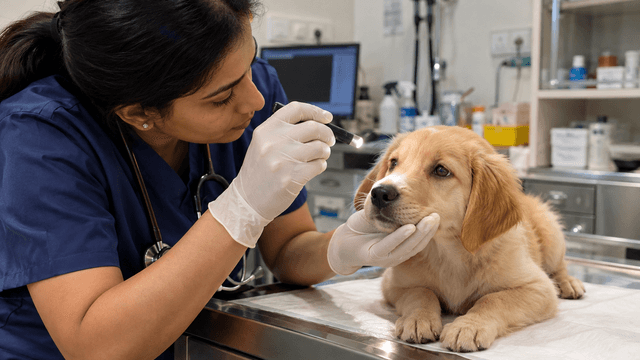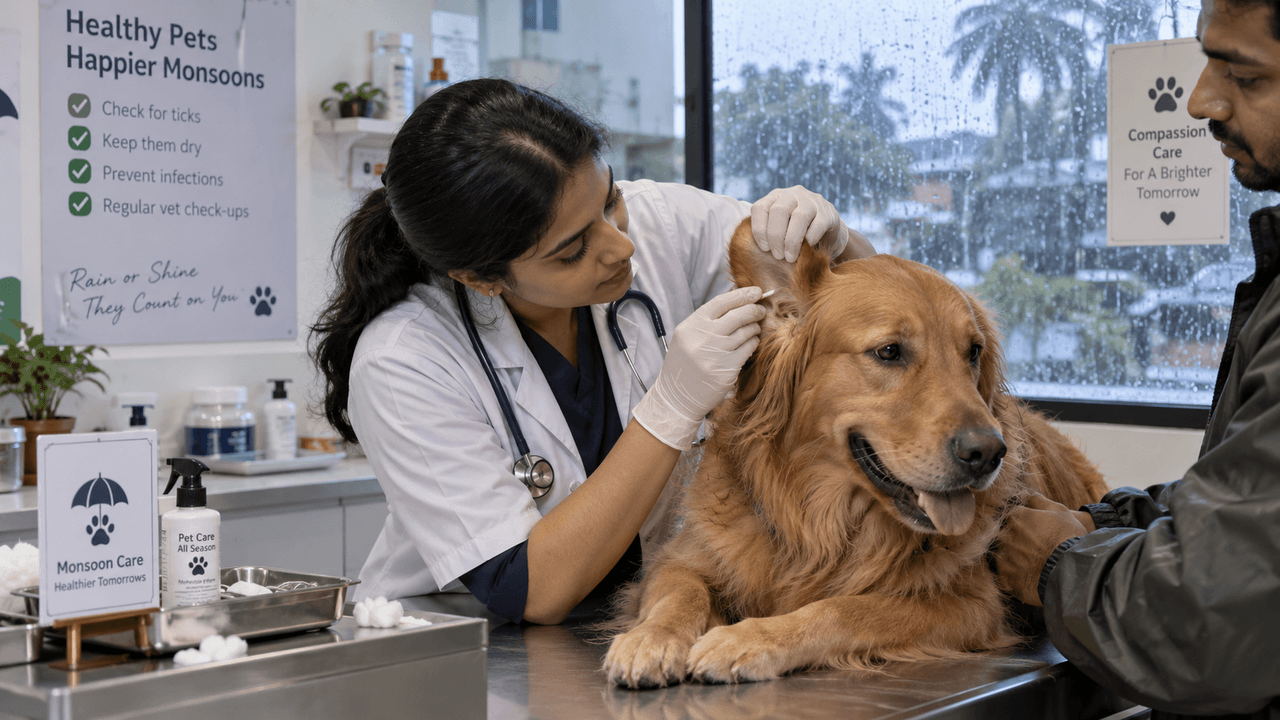
Tick fever in dogs in India is most commonly caused by Ehrlichia and Babesia organisms transmitted by Rhipicephalus and Hyalomma ticks. Symptoms include fever, lethargy, refusal to eat, pale gums and easy bruising: often 1–3 weeks after a tick exposure. If you see these signs, take your dog to a vet today; tick fever is treatable but worsens fast without intervention. Treatment typically costs ₹6,000–₹25,000 in metros for a 5–10 day course; severe cases more.
Why this matters in India
Tick-borne disease is the single most common preventable serious illness I see in Indian dogs. Ehrlichiosis and Babesiosis are endemic across India, with monsoon (June–September) and the immediate post-monsoon months being peak seasons. Yet most Indian dog owners only act on ticks after they see them: by which point the dog may already be incubating disease. This guide walks through what tick fever is, the signs in the order they appear, when it becomes a vet emergency, and the prevention regime that works in Indian conditions.
What is tick fever in dogs?
"Tick fever" is the umbrella name for several tick-transmitted infections common in India:
- Ehrlichiosis (caused by *Ehrlichia canis* and related species): the most common tick-borne disease in Indian dogs
- Babesiosis (caused by *Babesia* species): destroys red blood cells; can be acute and severe
- Anaplasmosis (caused by *Anaplasma platys / phagocytophilum*): also seen
- Hepatozoonosis: transmitted by ingesting infected ticks; less common but serious
These organisms travel inside the tick's mouthparts and saliva, and transmit to the dog typically after 24–48 hours of attached feeding. Removing a tick within the first 24 hours dramatically reduces disease transmission risk: this is why daily checks during monsoon matter.
Why tick fever is endemic in India
Three Indian-specific factors:
- Climate: humid post-monsoon conditions are optimal for the brown dog tick (*Rhipicephalus sanguineus*), which thrives indoors and outdoors in Indian cities
- Free-ranging dog population: community and stray dogs maintain tick reservoirs that pet dogs encounter
- Inconsistent prevention: many pet owners do not maintain monthly preventive tick-flea cover year-round
The result: a pet dog in any Indian city has meaningful tick exposure even without seeing a stray dog. Indoor-only dogs are not safe; ticks come in on humans, on visitors and through windows.
Symptoms of tick fever: in the order they appear
Tick fever can take 1–3 weeks after exposure to show symptoms, which is why owners often miss the connection.
Early (days 1–7 of illness):
- Lethargy and reduced activity
- Reduced appetite or full refusal to eat
- Fever (rectal temperature above 39.5°C; normal is 38–39.2°C)
- Generalised weakness
- Mild swelling of lymph nodes (under the jaw, behind the legs)
Progressing (days 7–14):
- Pale gums (instead of pink)
- Weight loss
- Bruising or pin-point haemorrhages on the gums, abdomen, ears (low platelets)
- Bleeding from nose or in urine
- Stiffness or reluctance to move
- Cloudy or red eyes (uveitis)
- Lameness
Severe (untreated, advanced):
- Severe anaemia, weakness, collapse
- Bleeding disorders
- Kidney involvement
- Seizures or neurological signs
- Death
The honest signal: a dog who suddenly stops eating, looks tired and has any tick history in the last month is a vet visit, not a wait-and-watch. The earlier the diagnosis, the cheaper and more effective treatment is.
How is tick fever diagnosed?
The vet will:
- Take history and physical exam: recent tick exposure, monsoon timing
- Order a CBC (complete blood count), looking for thrombocytopenia (low platelets), anaemia, leucopenia
- Order biochemistry: kidney and liver function
- Order specific tests: blood smear examination, PCR for Ehrlichia / Babesia, SNAP tests (4Dx for the common pathogens), antibody titres
A CBC alone strongly raises or lowers suspicion within an hour at most Indian clinics. PCR / 4Dx adds specificity and is increasingly available in metro and tier-2 clinics.
Treatment of tick fever in India
Standard veterinary treatment depending on organism and severity:
- Doxycycline: the standard for ehrlichiosis and anaplasmosis; typically 28+ days
- Imidocarb dipropionate or diminazene aceturate: for babesiosis; injectable
- Atovaquone + azithromycin: for some Babesia species
- Supportive care: IV fluids, anti-emetics, sometimes blood transfusion in severe anaemia
- Hospitalisation: for moderate to severe cases
- Follow-up CBC: to confirm platelet recovery
Treatment costs in India 2026:
Severity | Metro (₹) | Tier-2 city (₹) |
|---|---|---|
Early outpatient | 4,000–10,000 | 2,800–7,000 |
Moderate (requires IV fluids, repeat visits) | 8,000–20,000 | 5,500–14,000 |
Severe (hospitalisation, transfusion) | 20,000–60,000+ | 14,000–40,000+ |
A previously infected dog can often relapse or remain seropositive for years. Annual screening of recovered dogs is advised. This is one of the strongest cases for pet insurance enrolment before infection: see [HDFC ERGO Paws n Claws](/articles/hdfc-ergo-paws-n-claws-review) and [is pet insurance worth it in India](/articles/is-pet-insurance-worth-it-india).
Prevention: what actually works in India
The mechanism of prevention is to either kill the tick before it can transmit (oral / topical products) or to repel ticks (repellents: usually less effective).
Year-round monthly preventives (vet-prescribed; choose under vet guidance):
- Oral isoxazolines: afoxolaner (NexGard), fluralaner (Bravecto, 3-monthly), sarolaner (Simparica), lotilaner (Credelio). Kill ticks within hours of attachment, before disease transmission.
- Topical spot-ons: fipronil-based (Frontline Plus, Effitix), permethrin-based (do not use on cats; some on dogs)
- Tick-repellent collars: Seresto and similar; useful as adjunct, not primary prevention
In Indian conditions, oral isoxazolines are typically the most reliable because they don't wash off in bathing or monsoon water and they kill ticks fast enough to prevent disease transmission. Confirm dosing and frequency with your vet: never improvise pediatric or split doses.
Environmental control:
- Tick-treatment of yard and walls (the brown dog tick lives in cracks)
- Bedding washed weekly in hot water during monsoon
- Avoid letting your dog explore overgrown grass and bushes during peak season
- Daily tick check during monsoon, especially around ears, under collar, between toes, armpit, groin
What to do if you find a tick on your dog
- Remove it promptly: fine-tipped tweezers, grip at the head close to skin, steady upward pull. Do not twist or jerk.
- Do NOT use matches, oil, kerosene, alcohol or other home remedies to "make the tick let go": these increase disease transmission.
- Drop the tick in alcohol to kill it (do not squash bare-handed).
- Clean the bite site with antiseptic.
- Note the date: if symptoms appear in the next 1–3 weeks, this is important context for the vet.
- Monitor your dog: fever, lethargy, appetite loss over the next 21 days warrant a vet visit.
When to go to a vet: decision rules
Go today (same-day vet visit) if:
- Your dog is lethargic and has not eaten well for 24 hours during or after monsoon, especially with any tick history
- You see pale gums, bleeding from gums or nose, or pin-point bruises
- Your dog has fever, weakness or collapse
- Your dog had ticks in the past 4 weeks and now seems unwell
Go within 48 hours if:
- Your dog had a tick attached for an unknown duration
- Your dog's monthly preventive is overdue and you see new ticks
Routine vet visit:
- Tick discovered and removed promptly, dog otherwise normal, monthly preventive currently active: keep watch, report any change
Special cases
- Puppies under 6 months: more vulnerable; severe presentations more common. See [stray puppy care in India](/articles/stray-puppy-care-india) and the [puppy vaccination schedule](/articles/puppy-vaccination-schedule-india).
- Senior dogs: pre-existing kidney, liver or cardiac disease worsens outcomes; faster vet visit
- Pregnant or lactating dogs: some treatments are contraindicated; vet picks the protocol
- Breeds with thrombocytopenia predisposition (Cavalier King Charles Spaniels): extra caution
FAQ
Kutte ko tick fever ho gaya hai: kya symptoms hote hain?
Tick fever ke pehle signs hote hain: sustained thakavat (lethargy), khana band karna ya bahot kam khana, bukhar (39.5°C+ rectal temperature), aur kamzori. Aage chal ke gums pale ho jaate hain, naak se khoon ya pin-point bruises dikh sakte hain. Agar yeh signs dikh rahe hain, aaj hi vet ke pass jaaiye. Treatment effective hai, lekin der nahi karni chahiye.
How long does tick fever take to show up?
Symptoms typically appear 1–3 weeks after a tick attachment that transmitted infection. This is why owners often miss the connection: by the time the dog is unwell, the tick is long gone. Any unexplained lethargy + appetite loss during or after monsoon should prompt a vet visit with a CBC, regardless of whether ticks were seen.
Can tick fever be cured in dogs?
Yes: most dogs treated promptly with doxycycline (for ehrlichiosis) or appropriate antiparasitics (for babesiosis) recover well. The earlier treatment starts, the less supportive care is needed and the lower the long-term complication rate. Late presentations are harder to treat, and a percentage of dogs become chronic carriers requiring repeat treatment.
How much does tick fever treatment cost in India?
Outpatient early treatment ₹4,000–₹10,000 in metros, ₹2,800–₹7,000 in tier-2. Moderate cases requiring IV fluids ₹8,000–₹20,000 metros, ₹5,500–₹14,000 tier-2. Severe hospitalisation with transfusion ₹20,000–₹60,000+ metros, ₹14,000–₹40,000+ tier-2.
What is the best tick prevention for dogs in India?
Vet-prescribed monthly oral isoxazolines (NexGard, Bravecto, Simparica, Credelio) are typically the most reliable in Indian conditions: they kill ticks within hours of attachment, before disease transmission, and don't wash off. Topical spot-ons and tick collars are adjunct options. Confirm choice and dosing with your vet.
Do indoor dogs get tick fever in India?
Yes. The brown dog tick (the main vector in India) lives indoors as well as outdoors: in cracks, behind furniture, in bedding. Indoor-only dogs are still at risk and still need monthly preventive cover. Ticks also come in on visitors, on shoes and through open windows.
Can humans get tick fever from dogs?
The same tick species can sometimes feed on humans and rarely transmit Ehrlichia or Anaplasma to people. Direct dog-to-human transmission of canine tick fever is not the typical route. Handle removed ticks with gloves; use prompt tick removal as standard hygiene.
Sources
- WSAVA: global guidelines on tick-borne disease.
- AAHA: canine vector-borne disease guidelines.
- MSD Veterinary Manual: ehrlichiosis, babesiosis chapters.
- Companion Animal Parasite Council (CAPC) global reference.
A note from Critzo (please read): This article is general educational information written and reviewed by qualified veterinary professionals for Indian pet parents. It is not a substitute for an in-person consultation with your own veterinarian, who knows your pet, their history, and their current clinical state. Pets are individuals — breed, age, weight, pre-existing conditions, medications, and local disease patterns all change what is safe and what is not. Do not start, stop, or change any medication, vaccination schedule, diet, or treatment based on what you read here without first speaking to a registered veterinary practitioner. If your pet is showing emergency signs — collapse, seizure, severe bleeding, suspected poisoning, breathing difficulty, bloated abdomen, repeated vomiting or no urination for more than 12 hours — stop reading and go to the nearest 24-hour veterinary hospital immediately. You follow any guidance from this article at your own risk and at your pet's risk. Critzo, its authors, and its reviewers accept no liability for outcomes arising from decisions made without veterinary supervision.